Thomas Westra

Thomas Westra · Unique sculpture

Lizard Bar Stools
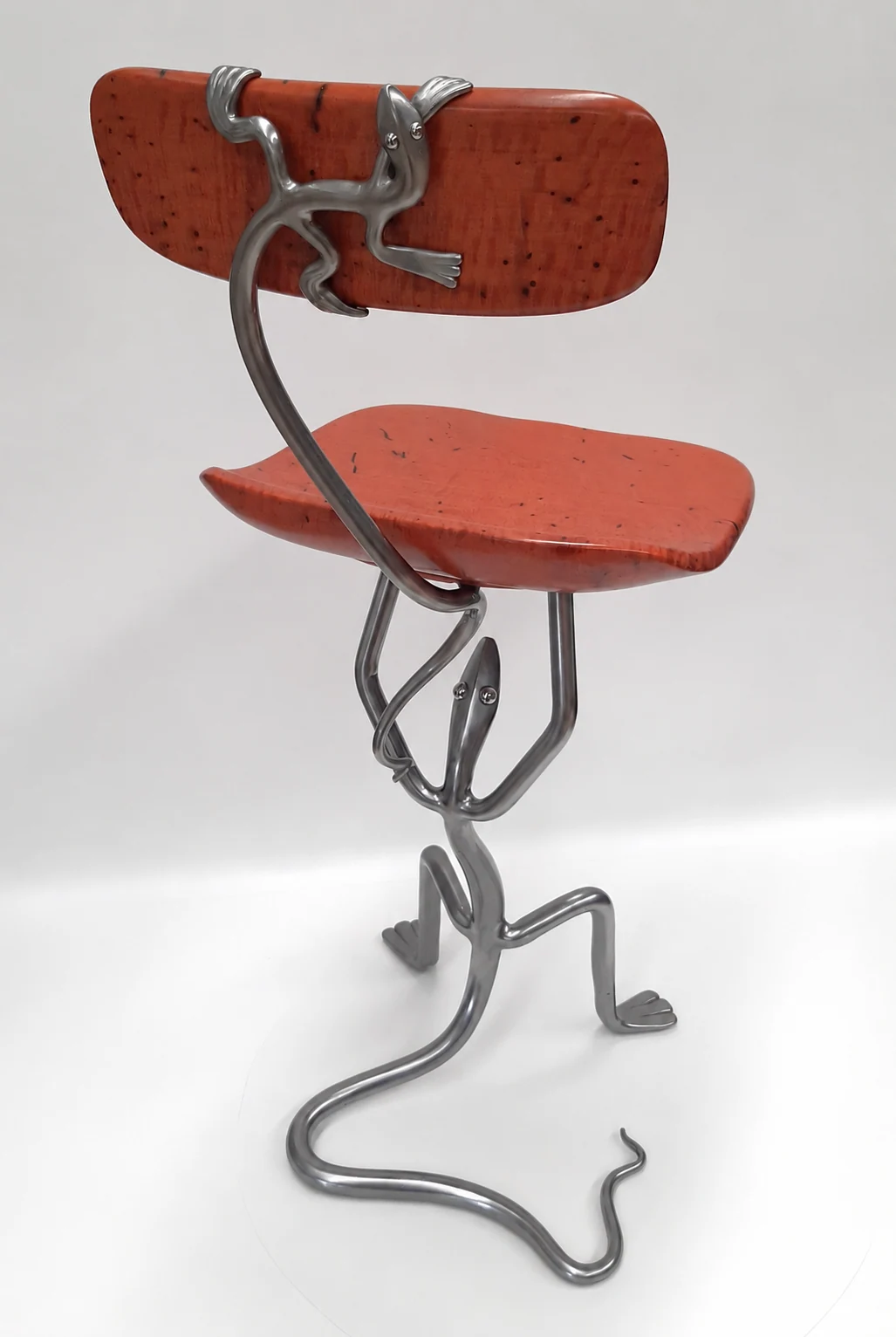
Full view of a timber-seated stool with a long steel lizard forming the base and a smaller lizard gripping the backrest.
One of the four finished Lizard Bar Stools.

I made these four bar stools for a client who wanted timber from their farm to become part of something their family could use for generations. The seats echo the shape of old tractor seats. Each one rests on a hand-forged steel lizard, with a smaller lizard gripping the timber backrest.

This was the most complex commission I’d taken on. The timber had wormholes, cracks and splits that I wanted to keep visible. Shaping it into a tractor seat took me into a kind of 3D modelling I hadn’t tackled before. The steel bodies posed a different problem. I had to make the lizards strong enough to carry the seats while keeping the character of my forged lizard sculptures.

Explore how the stools were made

Sold

Discuss a related commission
Materials
Farm-sourced timber, forged steel, black epoxy resin and aluminium badges with resin infill. Polished steel with a clear polyurethane finish.
Dimensions
Dimensions to be confirmed.

Up close
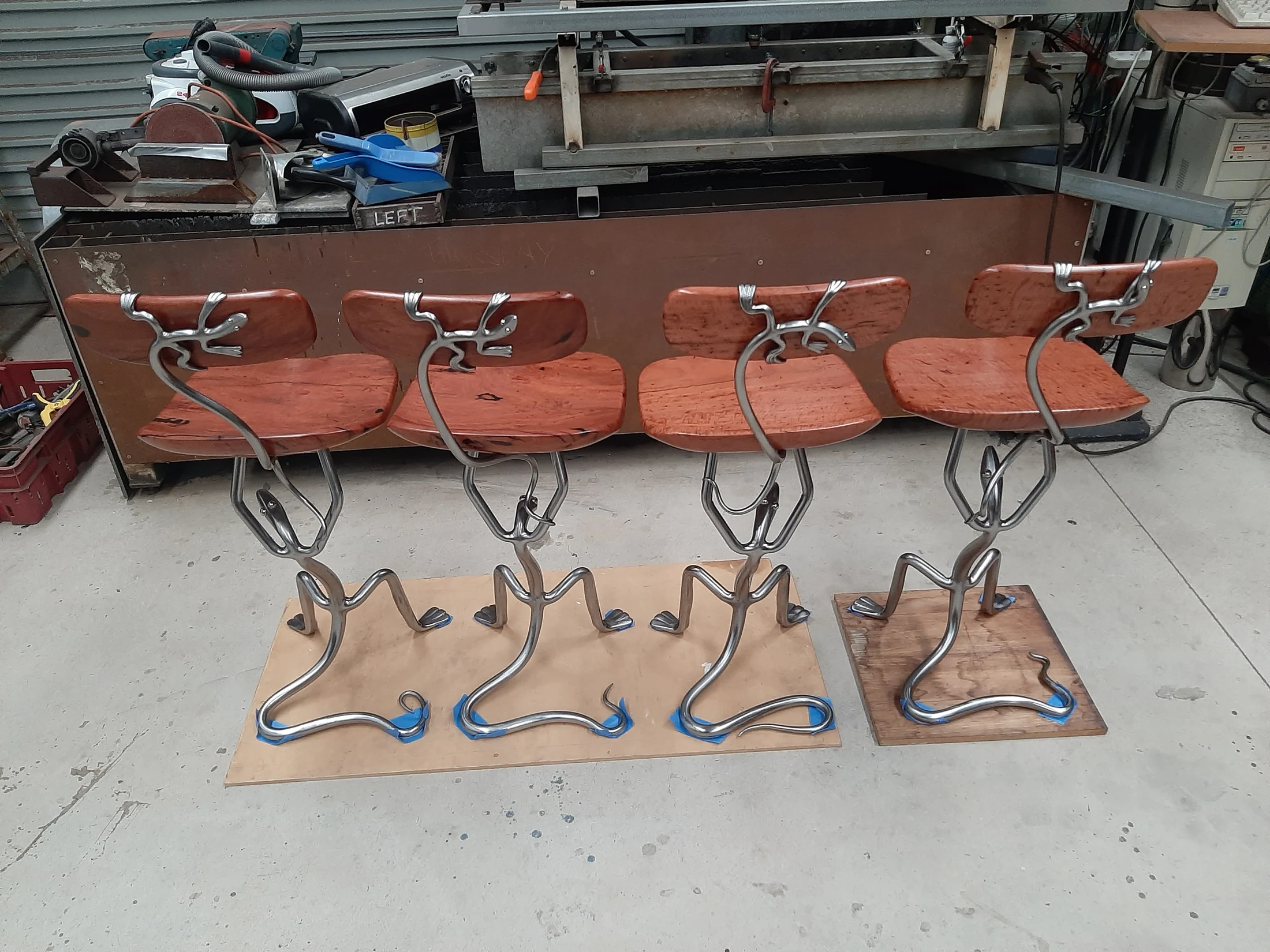
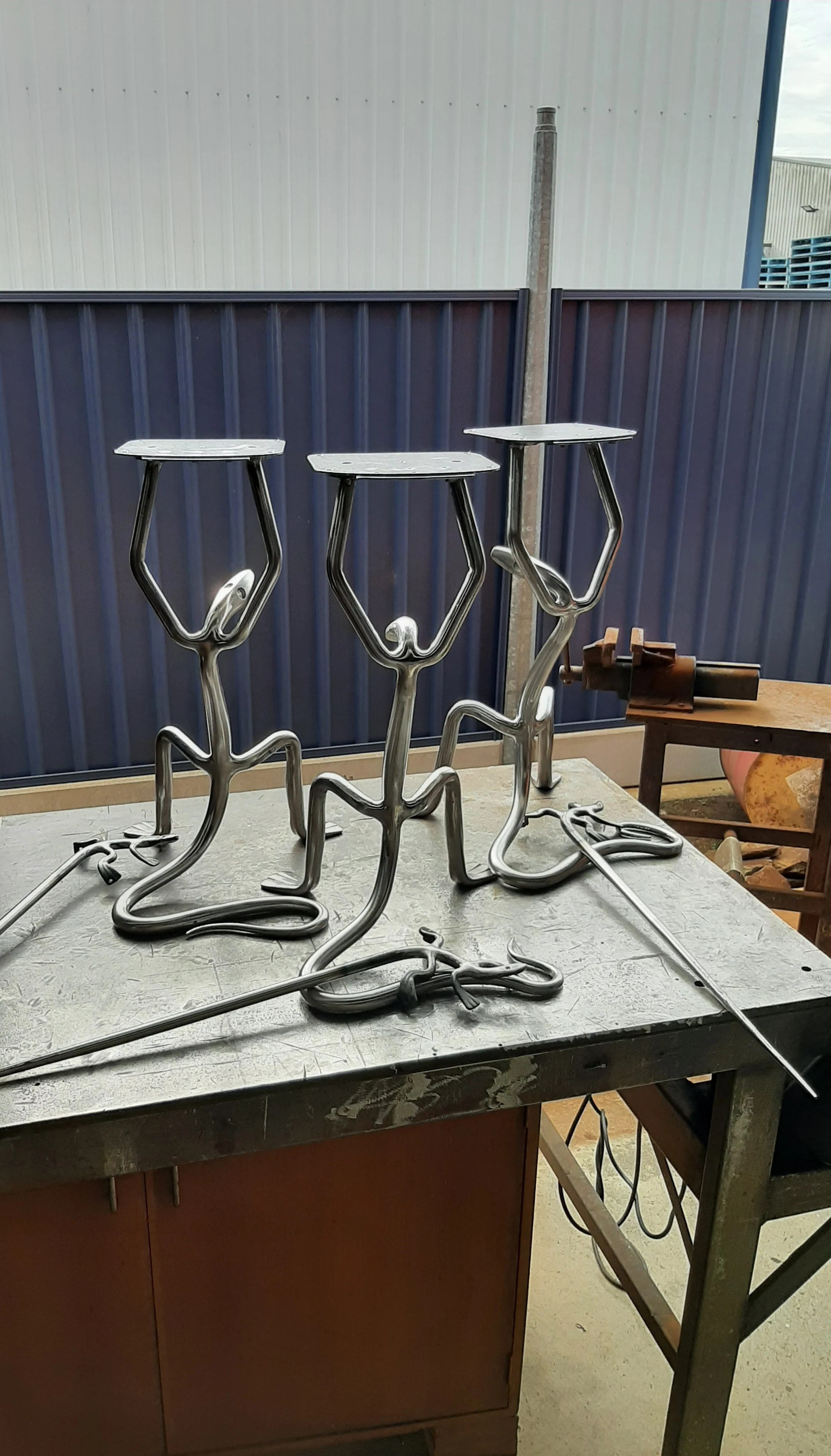
Four timber-and-steel stools lined up in the workshop.
All four stools together in my studio.
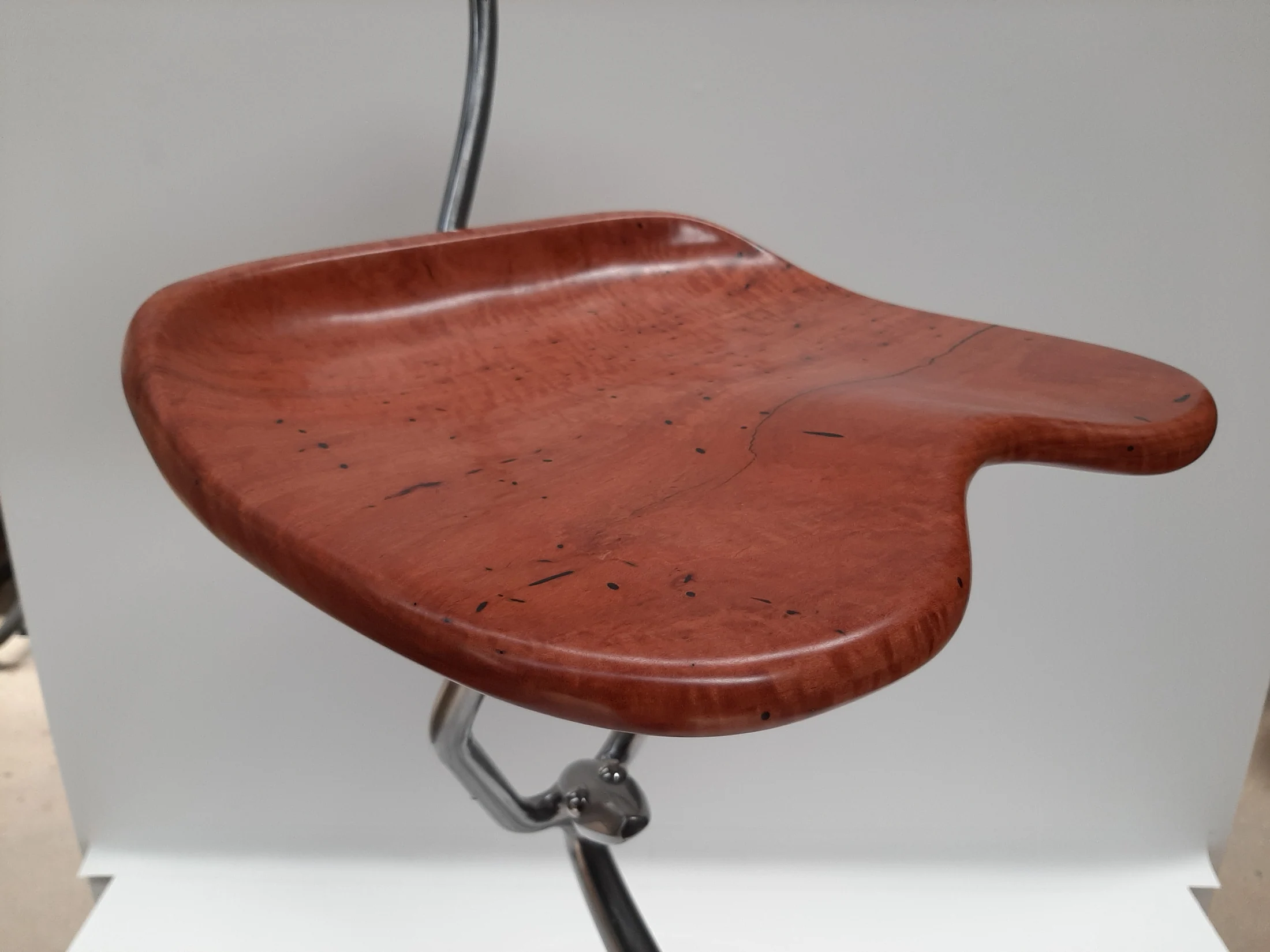
Reddish timber seat with a curved back edge and a shaped front.
The curved timber seat takes its shape from an old tractor seat.
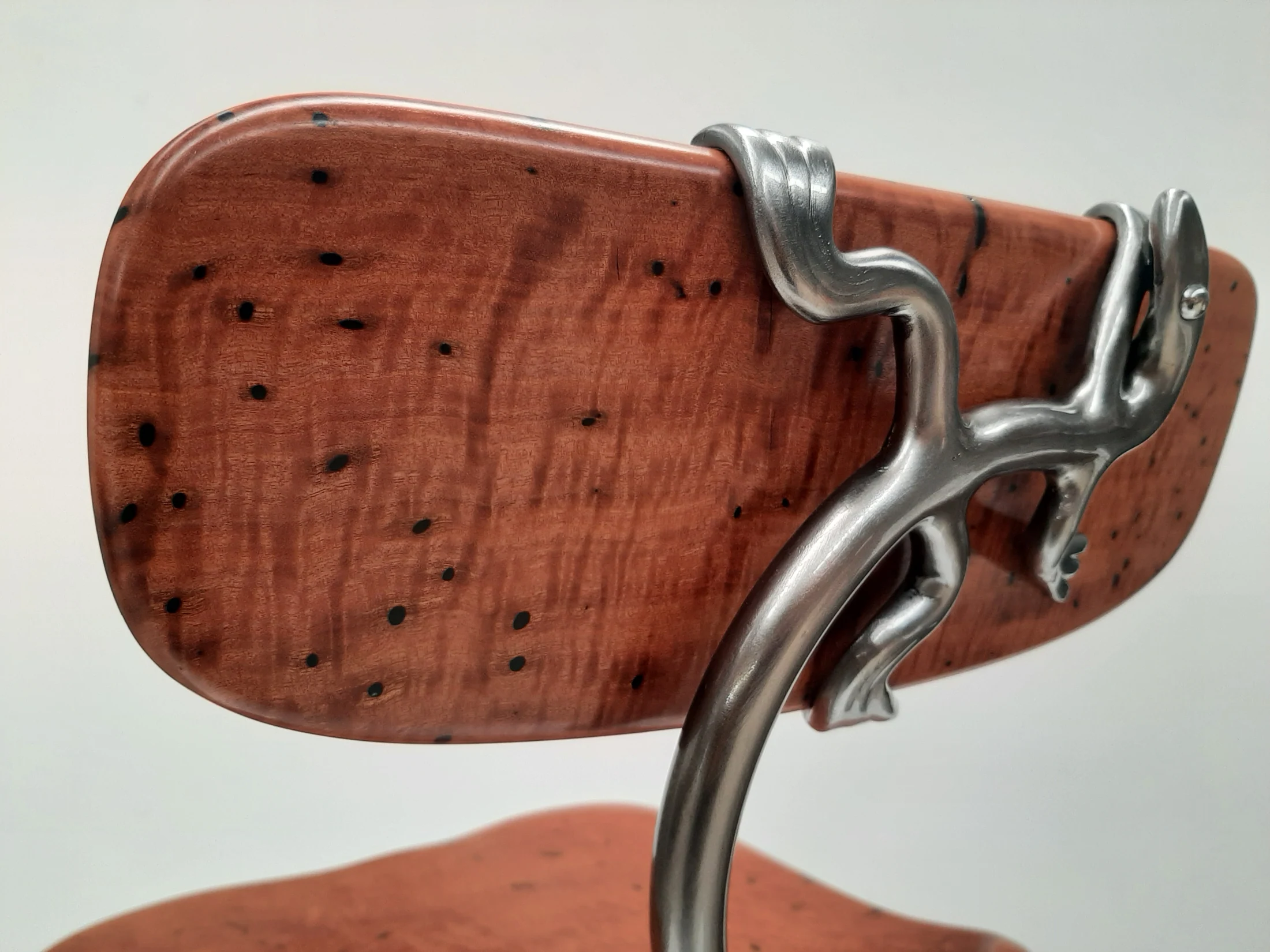
Side view of a small forged steel lizard gripping a finished timber backrest.
A smaller forged lizard grips the timber backrest.

How it was made

Timber from the farm

The timber from the farm was part of the brief from the start. When I looked closely at the slabs, I found wormholes, cracks and splits. I wanted to keep those features visible in the finished stools because they belonged to this particular timber.
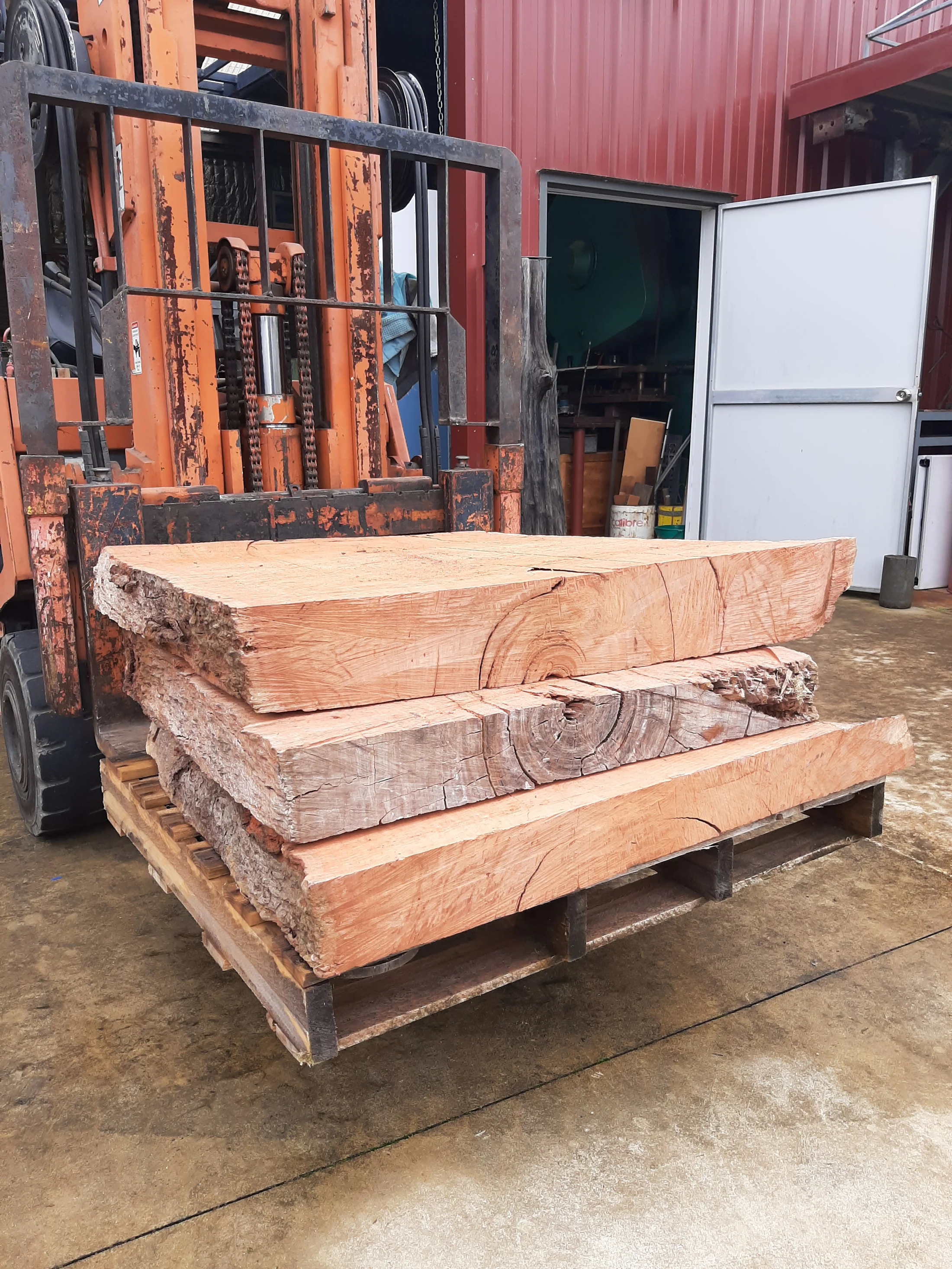
Stacked timber slabs being unloaded.
The farm timber slabs as they arrived.
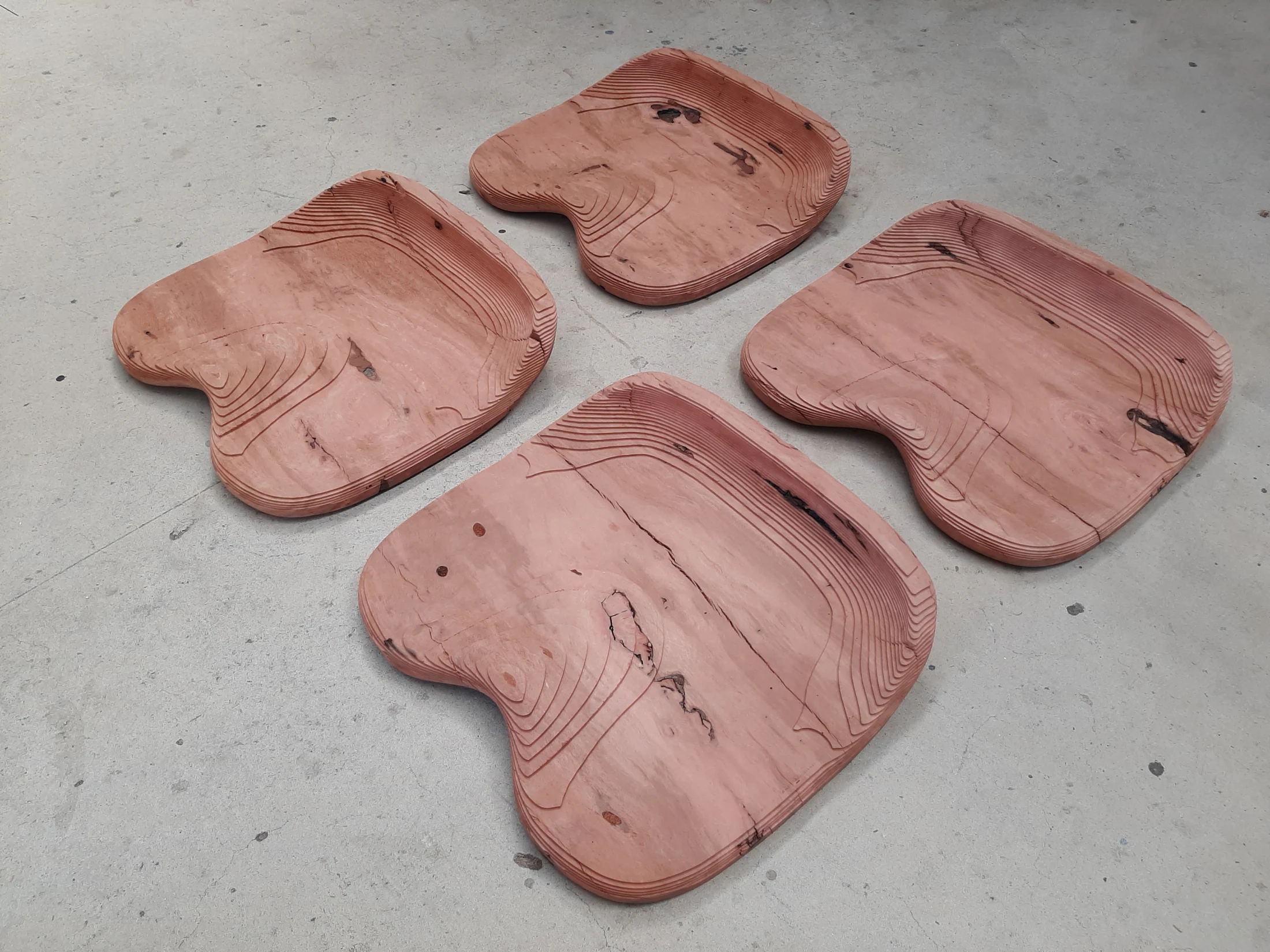
Four roughly machined timber seats with visible splits before resin casting.
Four roughly machined seats prepared for resin casting.

Shape the tractor seat

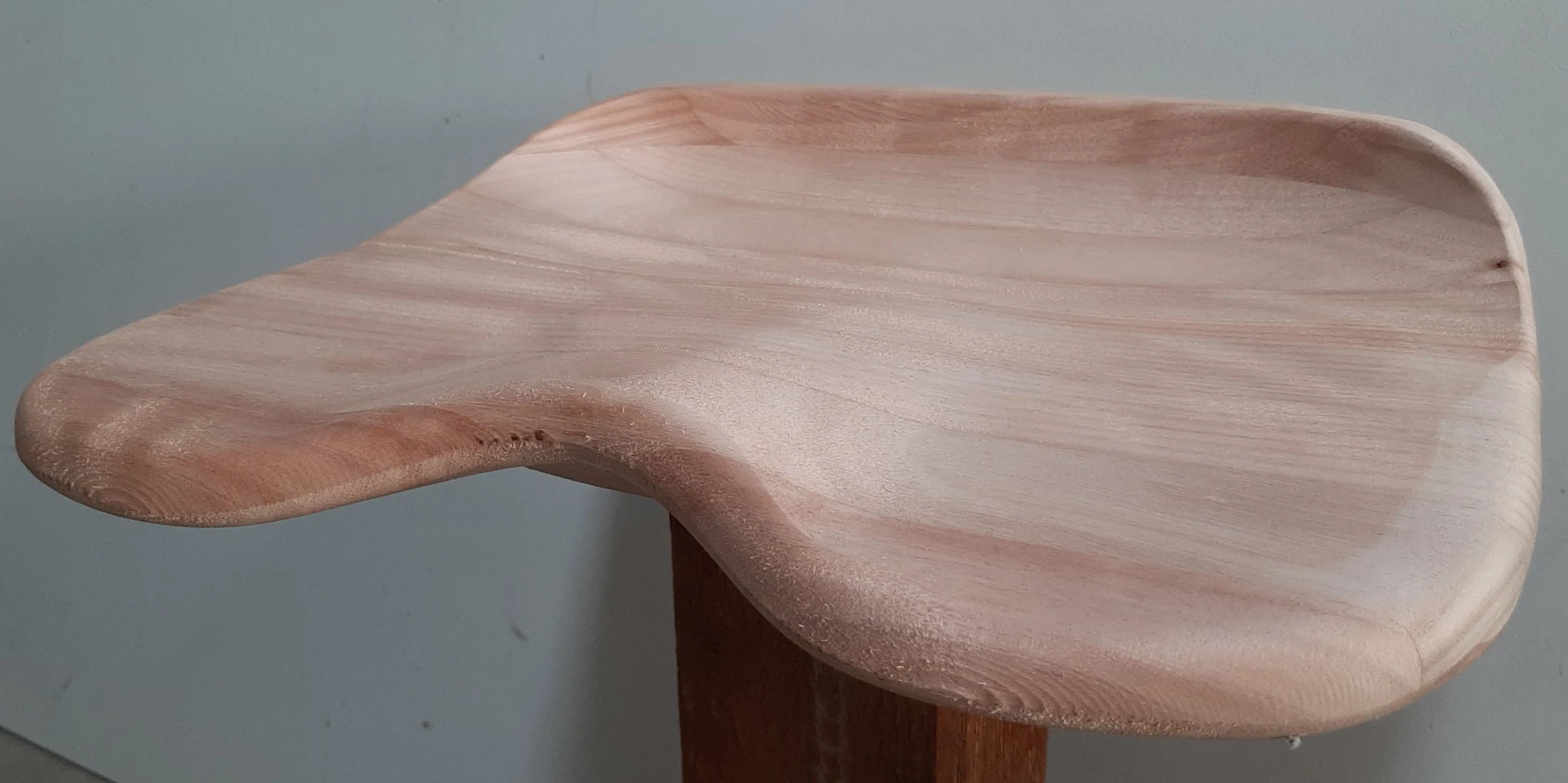
Turning an old tractor-seat silhouette into a sculpted timber seat was my first major exercise in modelling an organic shape in 3D CAD. I made a full-size prototype and built a three-axis CNC machine to machine the seats and backrests.
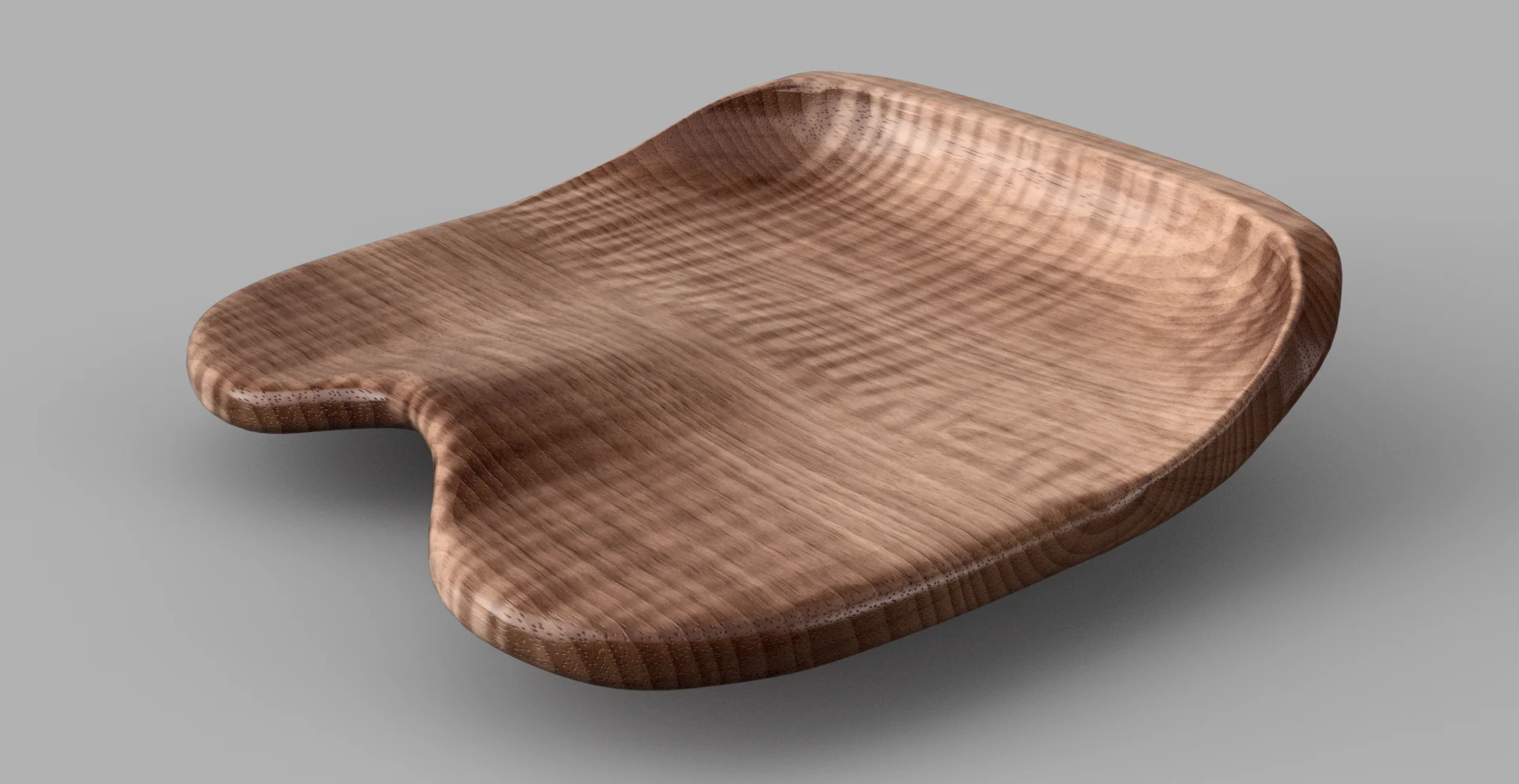
Digital render of a scooped timber seat with a shaped front edge.
CAD render of the tractor-seat design.
A shaped wooden seat prototype on a stand.
My first full-size seat prototype, made from seasoned glulam timber.

Keep the timber’s character

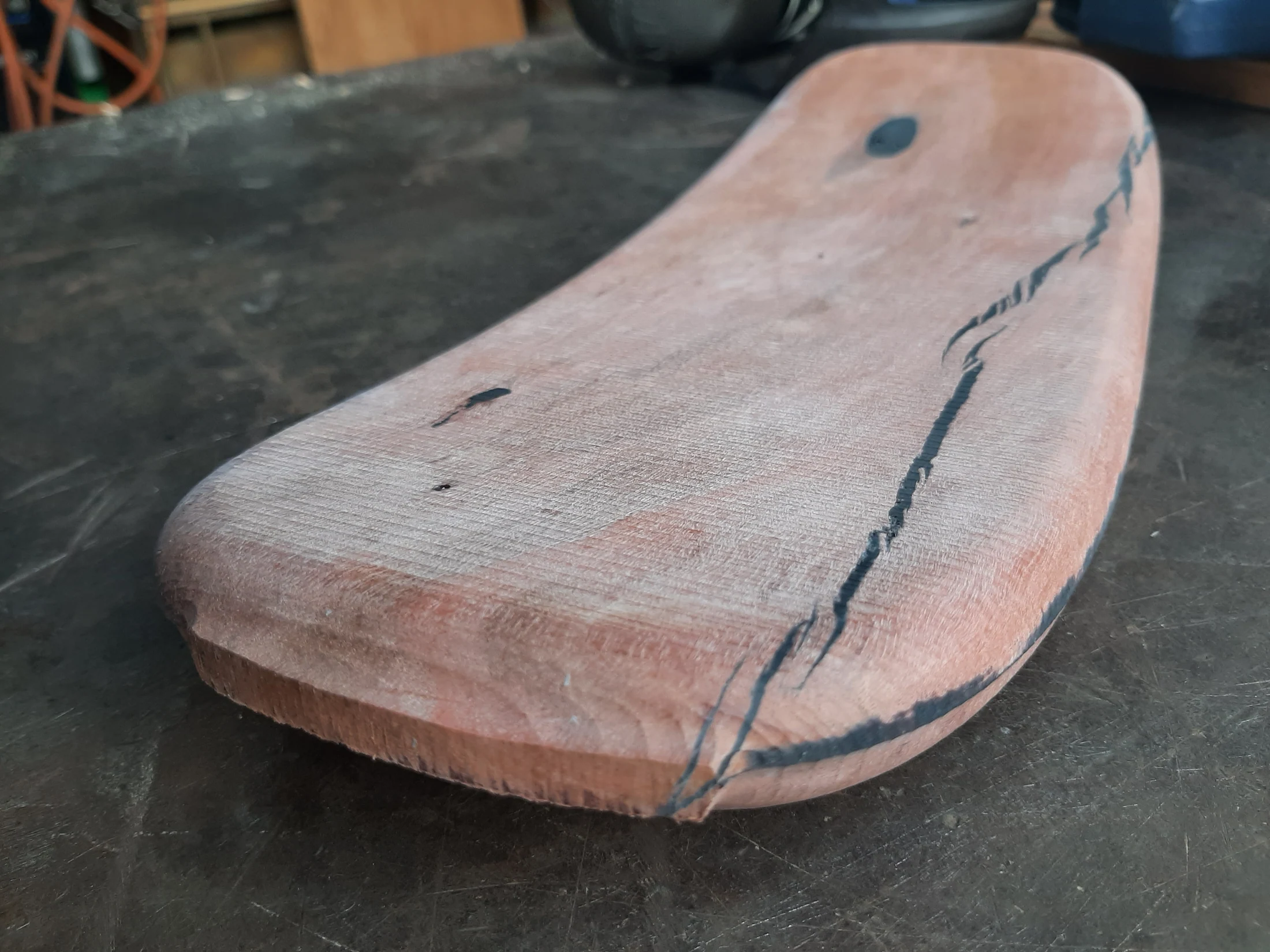
I filled and stabilised the wormholes, cracks and splits with black epoxy resin. Once I machined the surface back, the grain was visible again and the resin stayed in the openings. The finishing clip shows the CNC working across the top of a final seat made from the client’s timber.
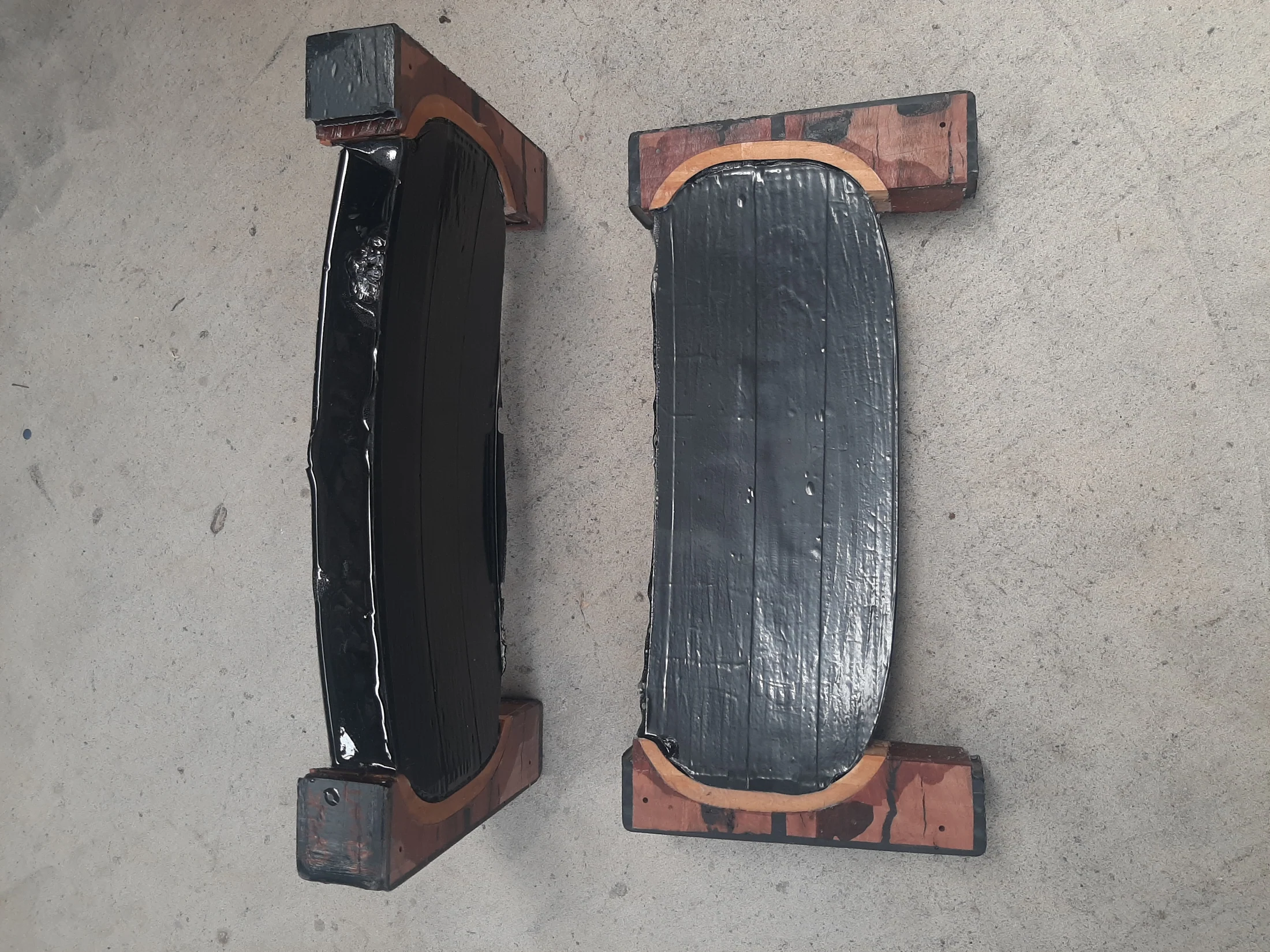
Two dark resin-covered backrest blanks.
Two backrests covered in black epoxy resin.
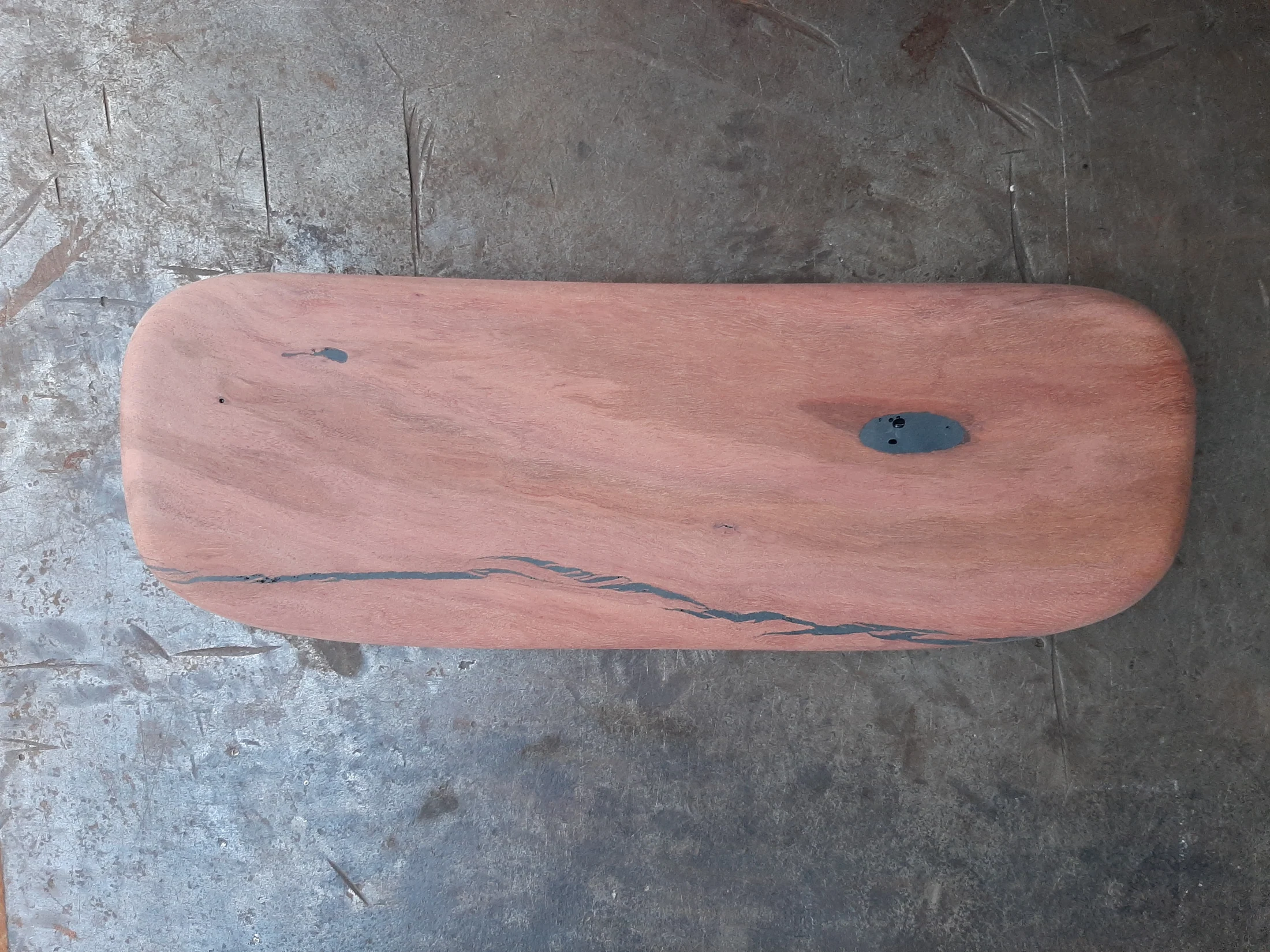
Machined timber backrest with dark resin filling the openings.
Timber backrest with resin infill and machined surface ready for hand sanding.
Shaped timber backrest with visible grain and dark resin infill.
The hand-sanded backrest with resin remaining in the openings.
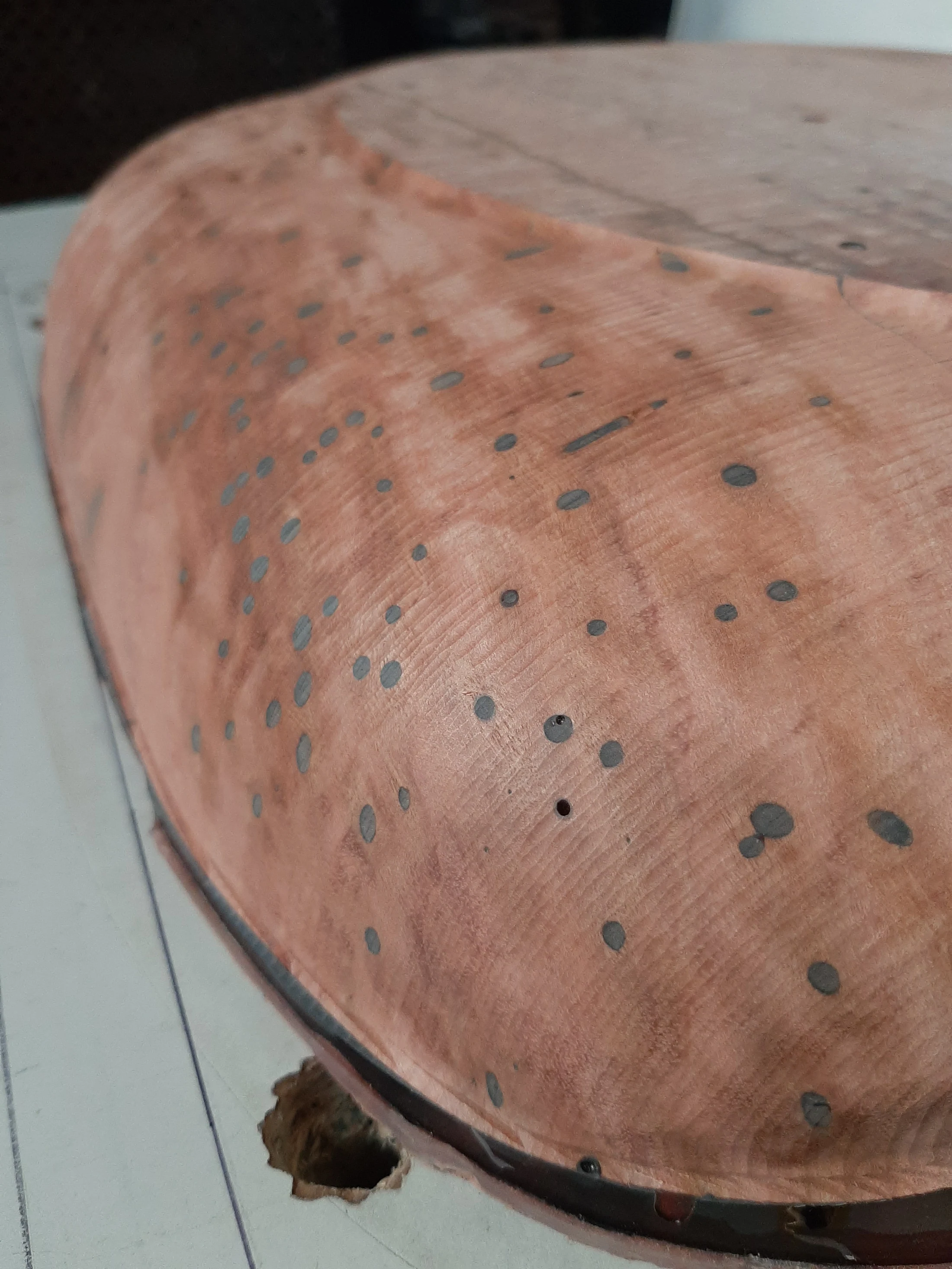
Close-up of dark resin filling a wormhole in machined timber.
A close-up of a resin-filled wormhole after machining.

Watch the final seat being machined

Machining the top of a final seat after filling the openings in the client’s timber with black epoxy resin. Watch on YouTube

Give the steel lizards strength

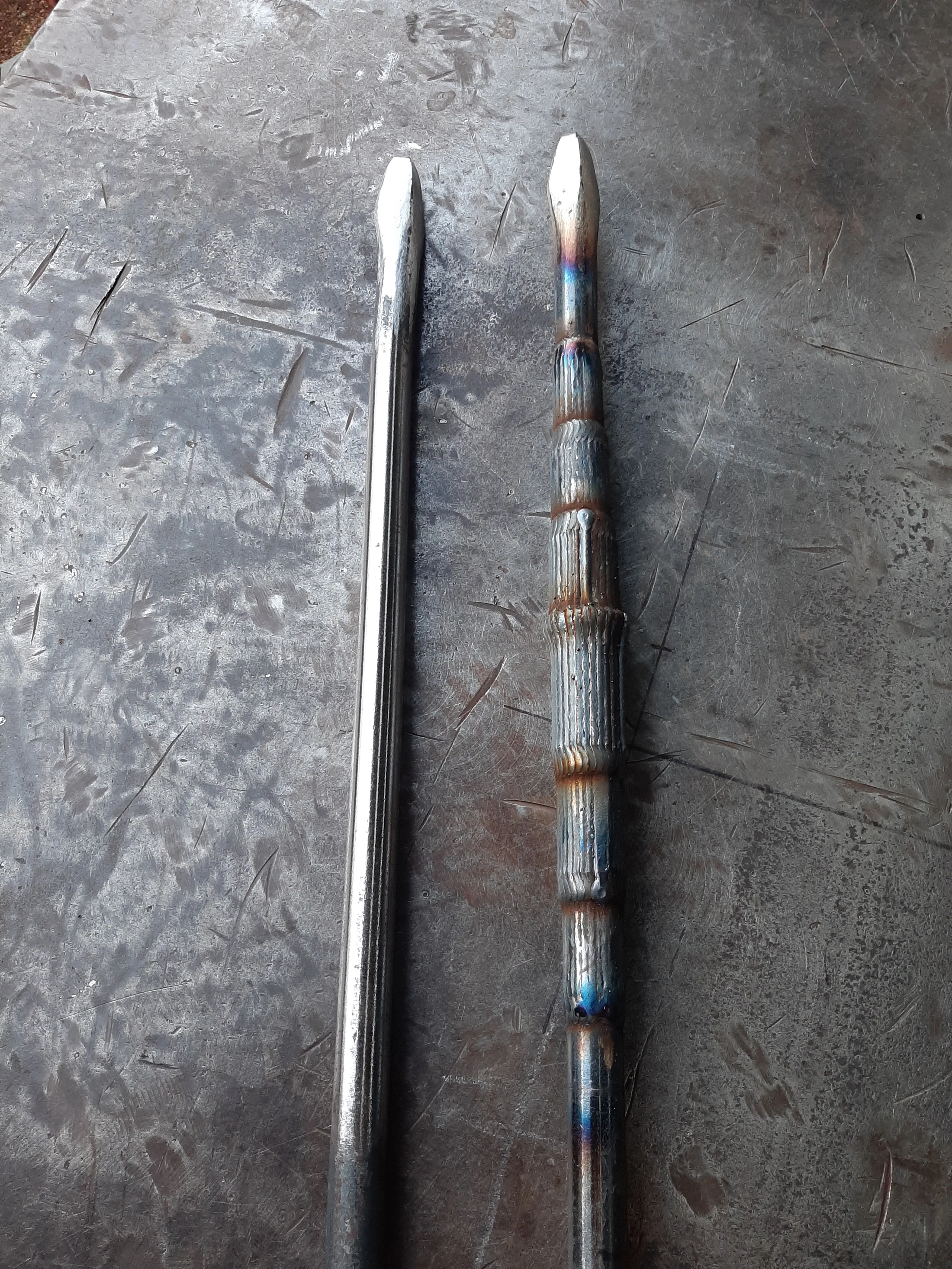
I’d forged plenty of lizards before, but these were the first that needed substantial bellies to carry a seat. I developed a robotic MIG welding process to build up the steel in that part of the body, then brought the forms together with the forged legs and the rest of the assembly.
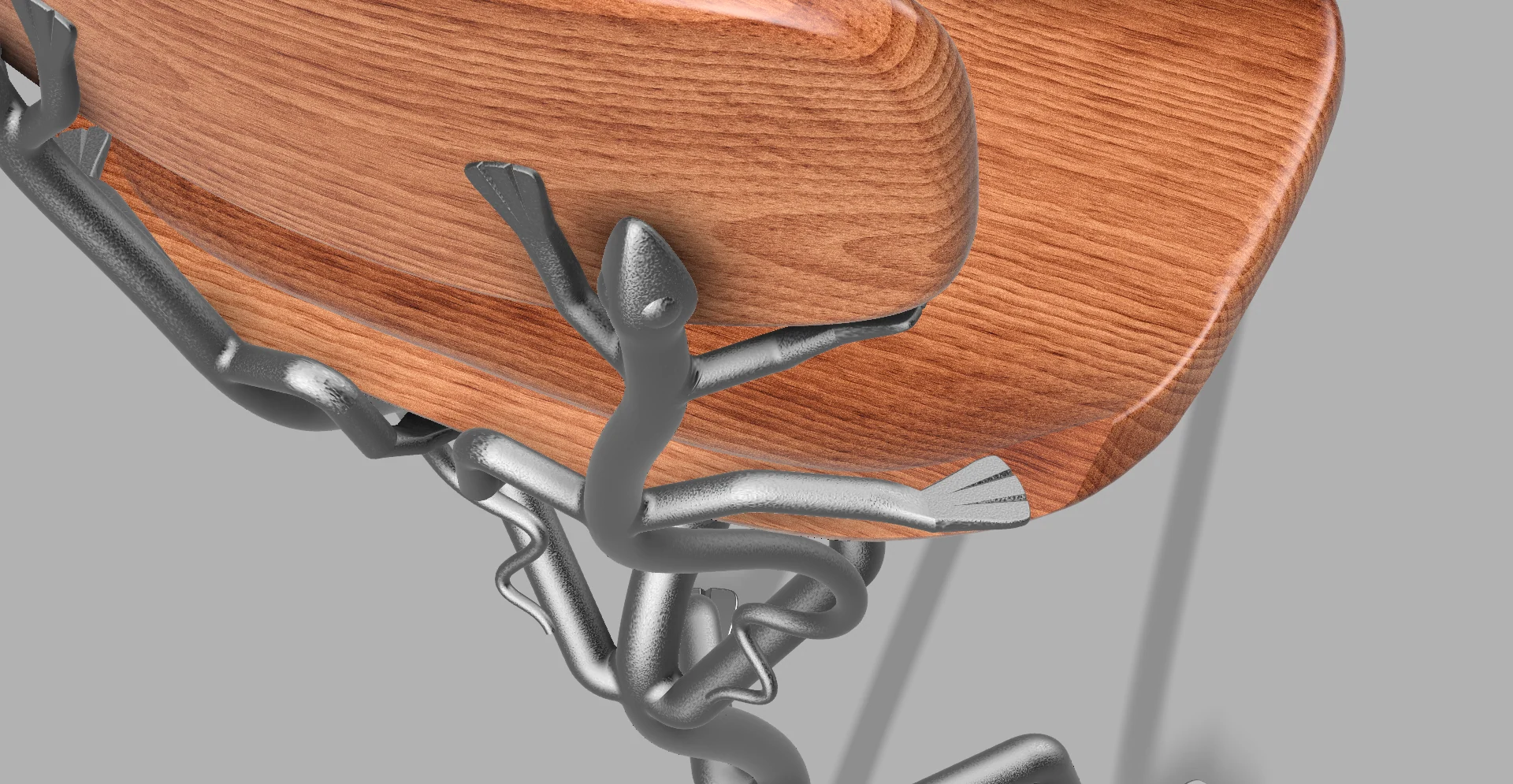
Digital model of the lizard backrest support for the second prototype.
CAD view of prototype two lizard backrest support.
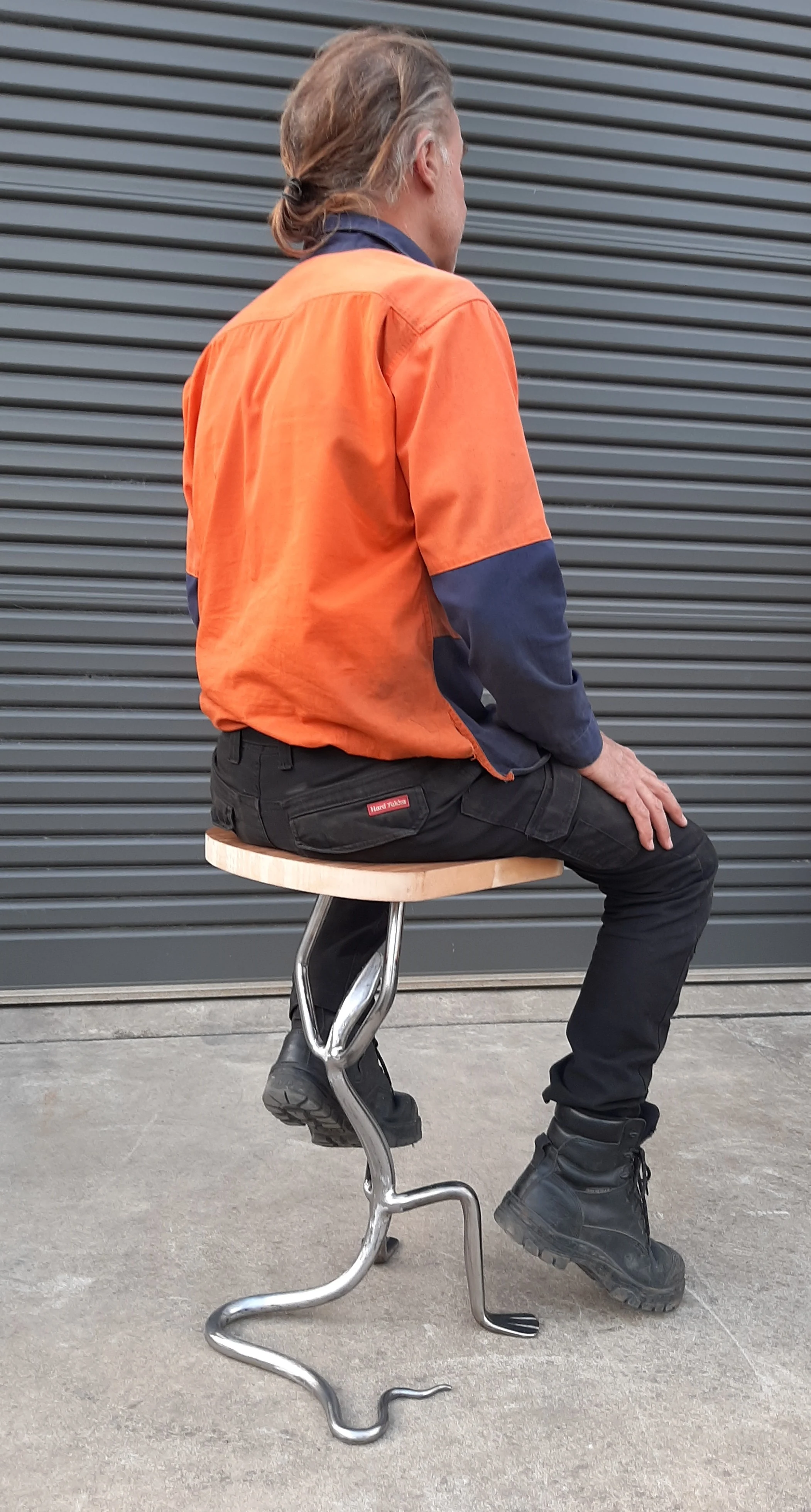
Thomas sitting on an early timber-and-steel stool prototype.
Trying the first stool body prototype.
Two steel pieces side by side, one thicker from deposited weld metal.
Steel before and after robotic MIG deposition for the lizard bellies.
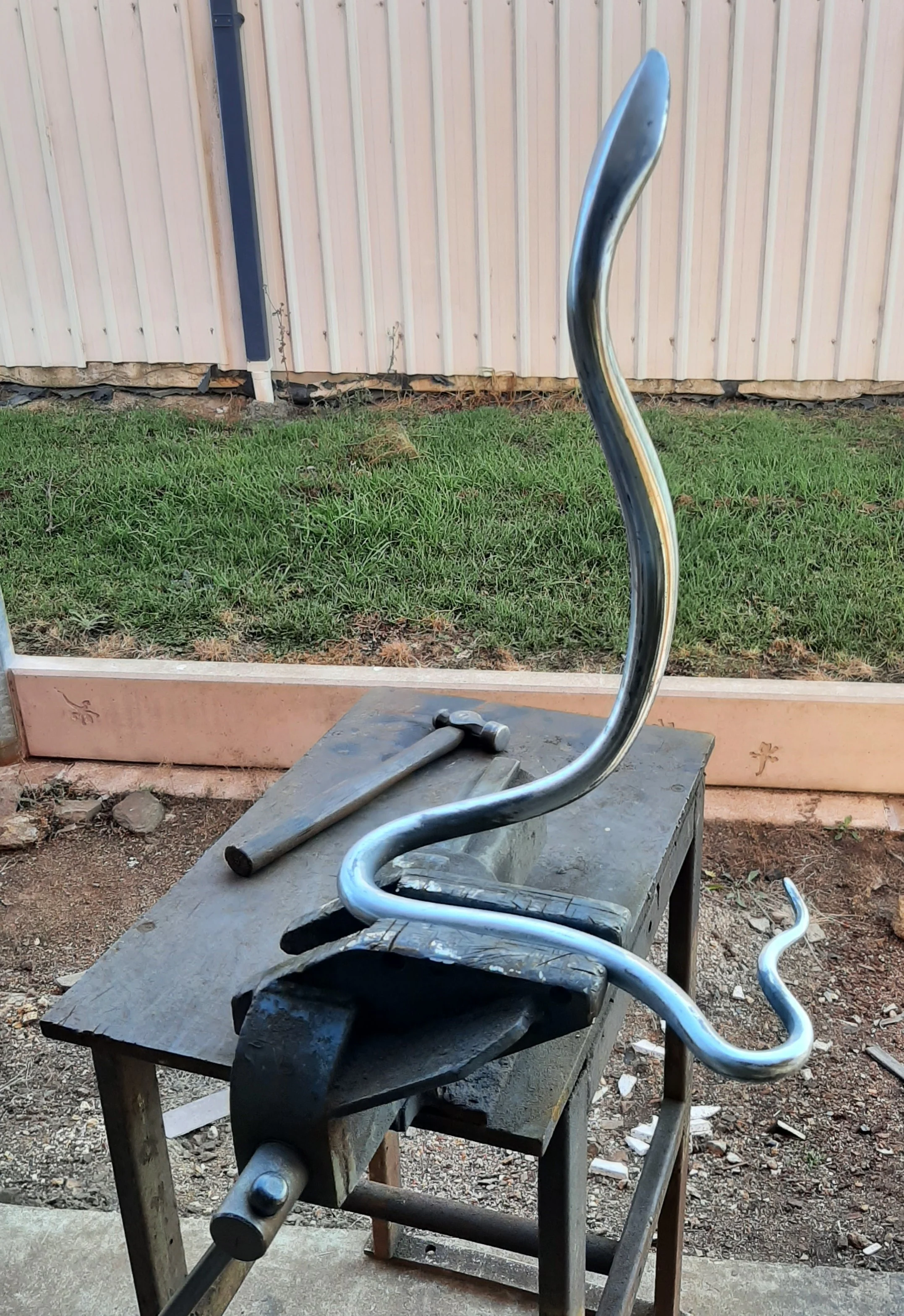
A steel lizard body held in a workshop vice.
The steel lizard body with its built-up belly, held in a workshop vice.

Fabricating the forged steel

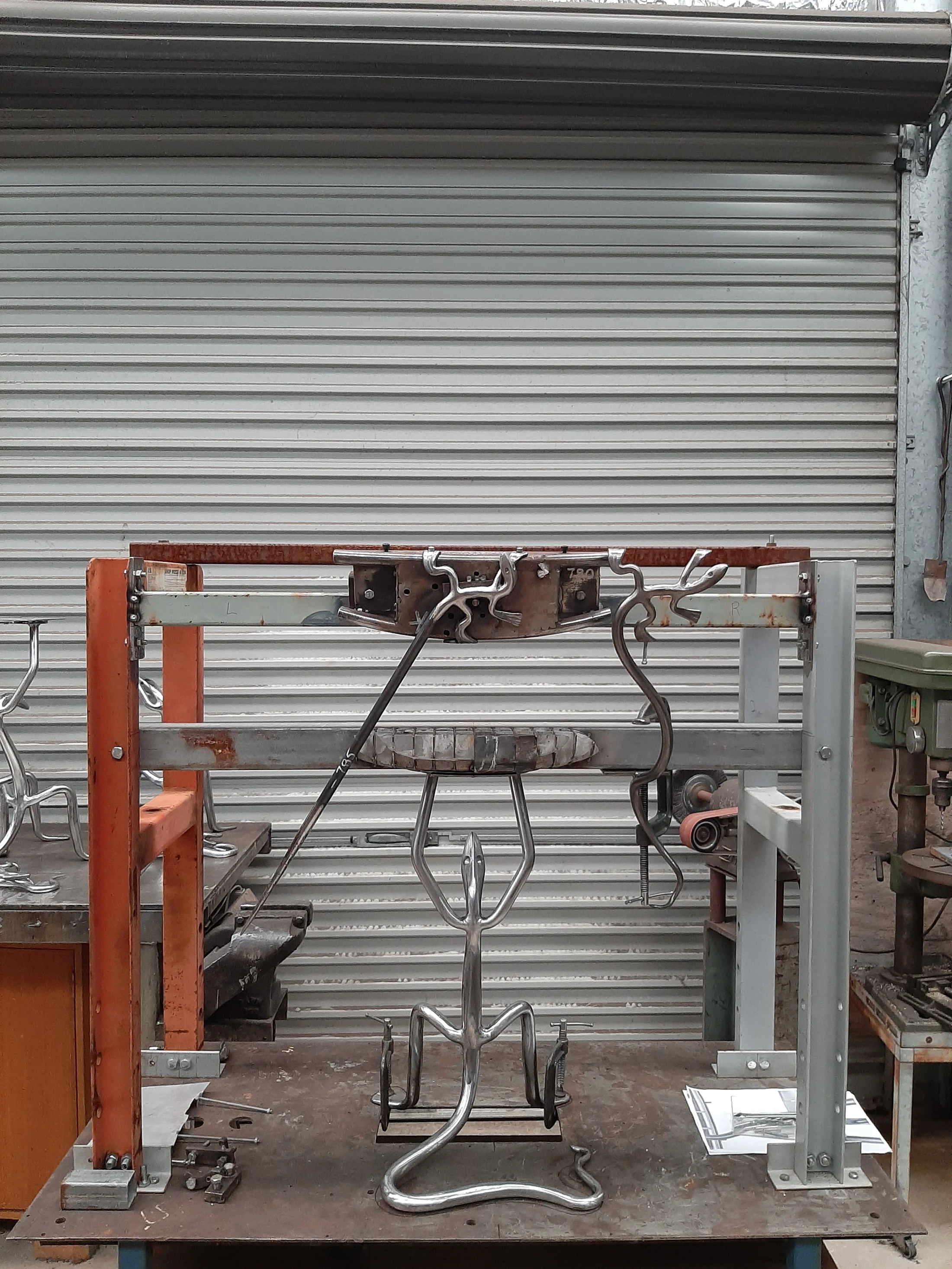
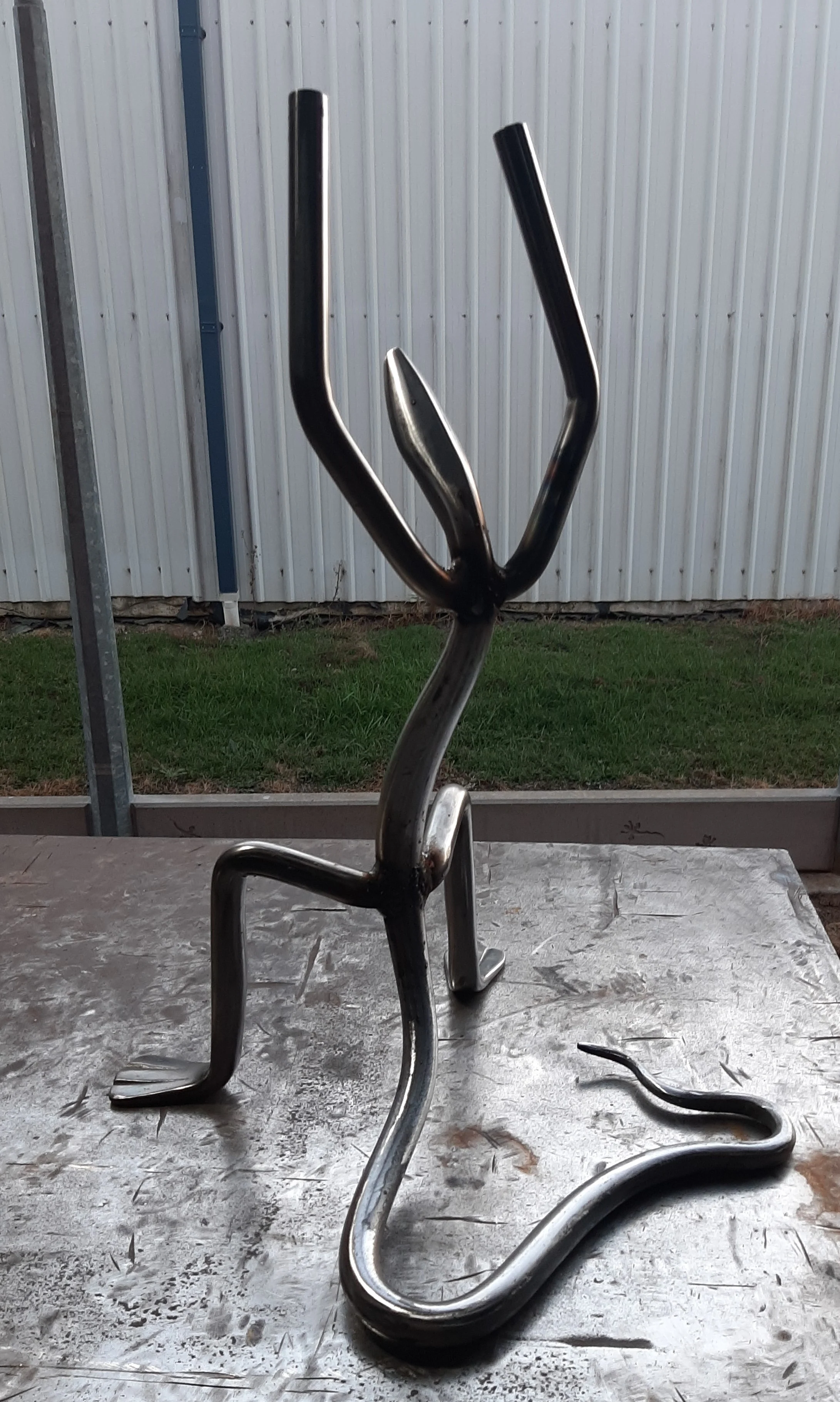
I used a jig to hold the forged parts in place while I welded each main body. With the bodies assembled, I chose a backrest lizard for each stool, then laid out and tested the fit against the timber. The smaller lizards each had a different pose, so I shaped their tails to fit the main bodies.
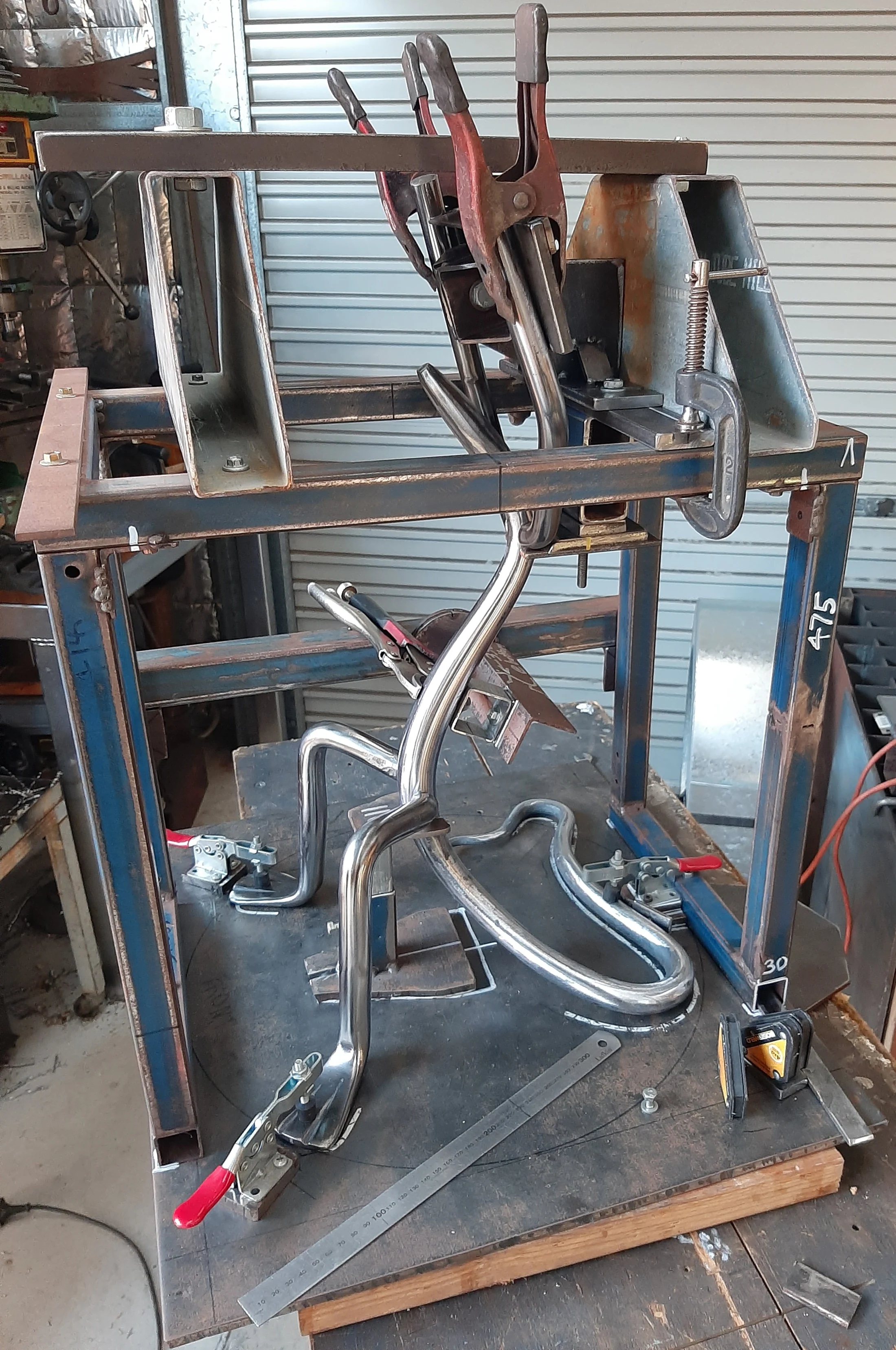
Forged steel parts held in a jig with clamps before welding.
I set up the jig to hold the forged lizard components in place for welding.
The welded main lizard body standing on a workbench.
The main lizard body after welding.
Steel stool frames and loose lizard components on a workbench.
Choosing which backrest lizard would go with each stool.
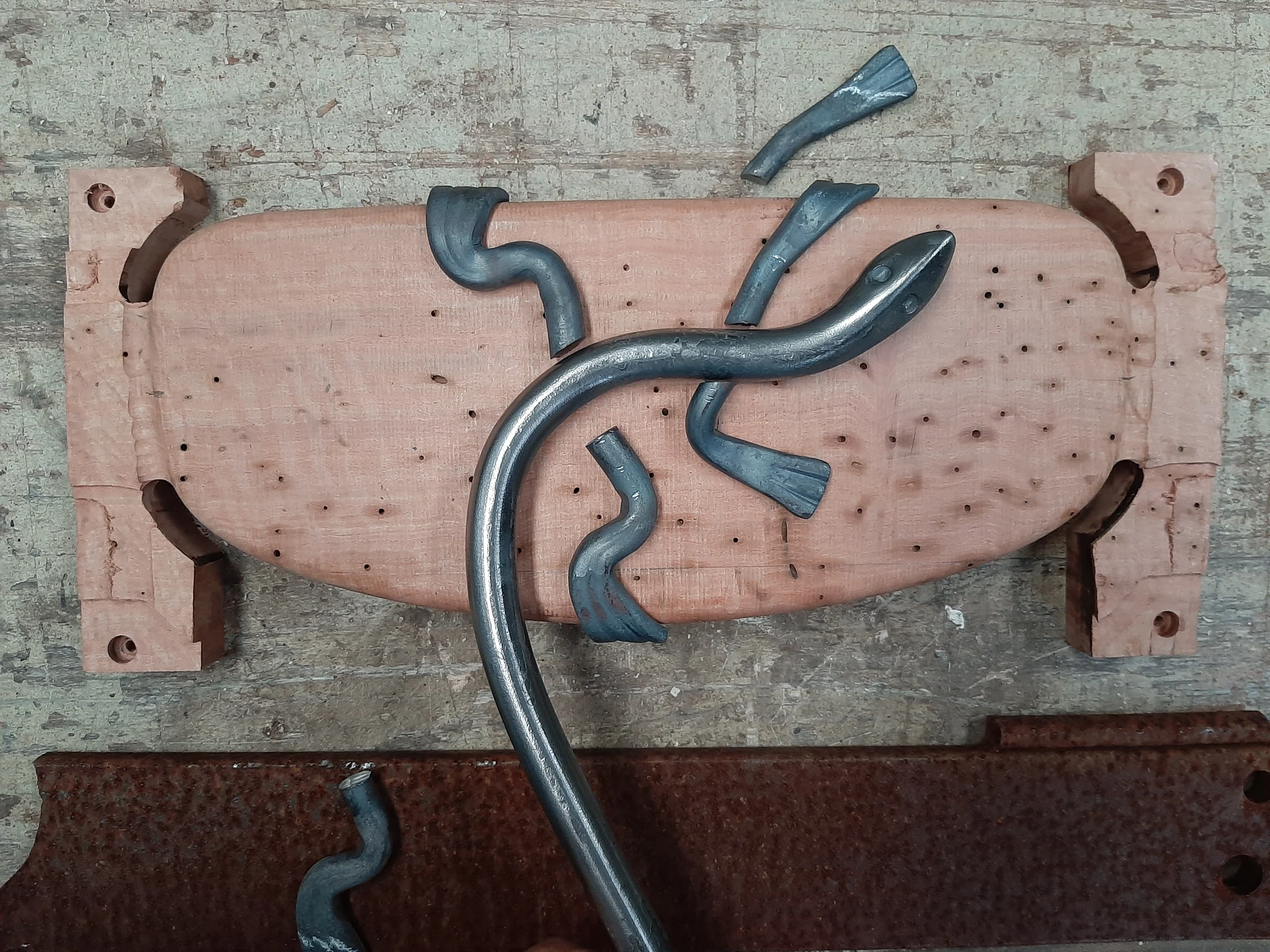
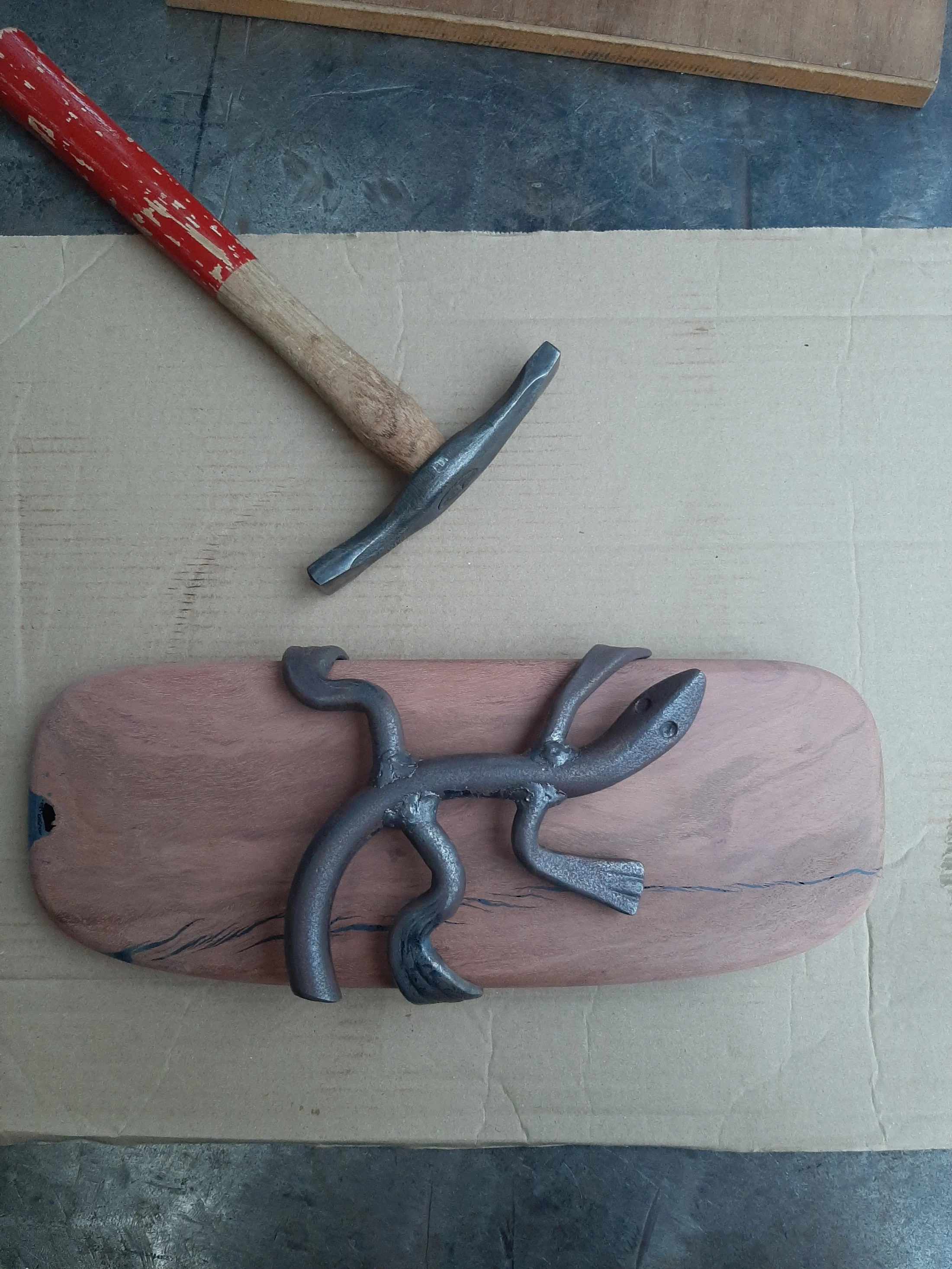
Forged lizard parts laid out on a rough timber backrest.
Laying out the forged lizard parts against the raw timber backrest.
A steel lizard being test-fitted against a shaped timber backrest.
Testing how the smaller lizard fits the timber backrest.
The stool frame in a workshop jig with the smaller lizard’s tail ready to shape.
The tail of the backward-looking backrest lizard, ready to be shaped to fit the main lizard.

Finish the set

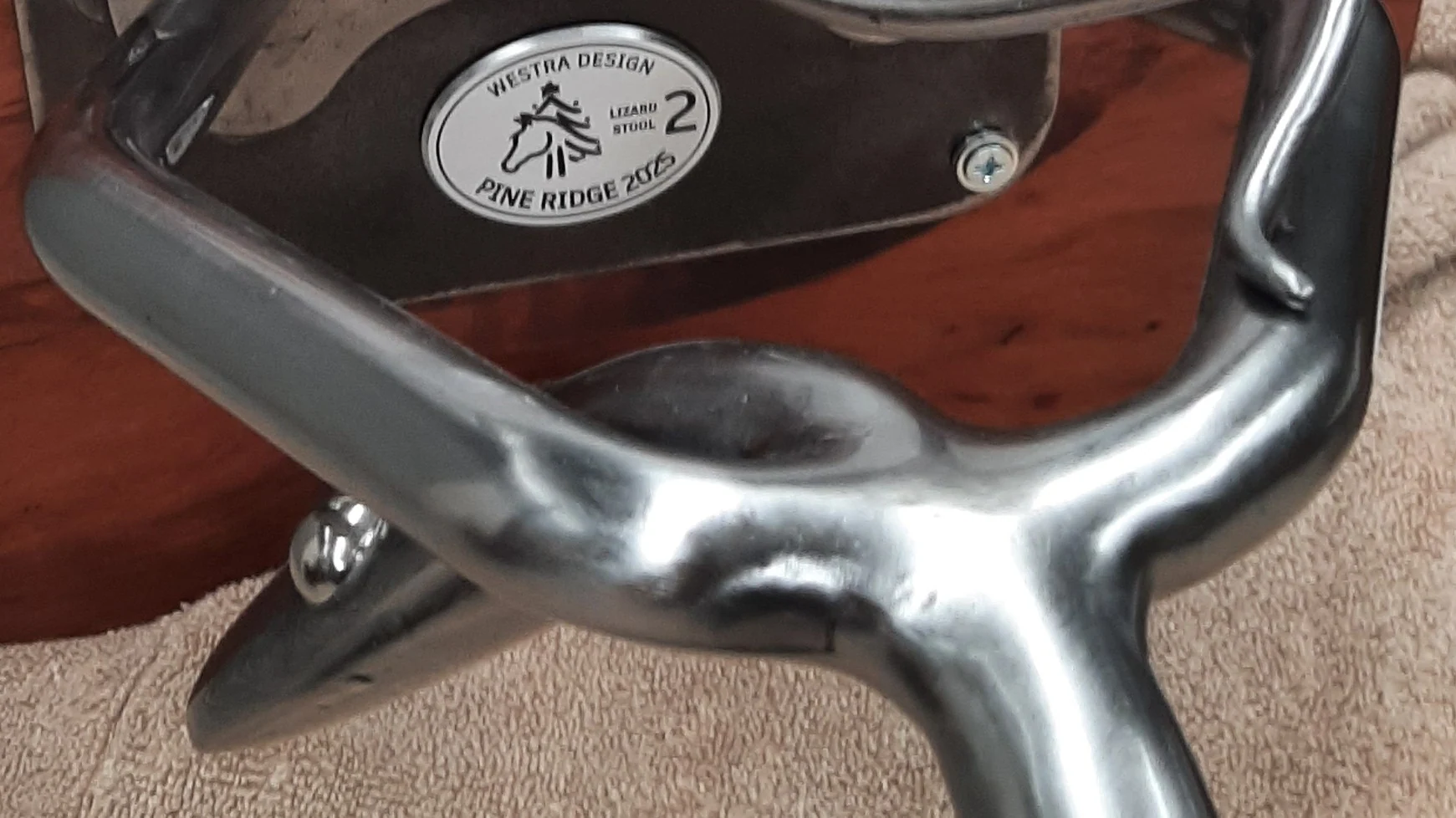
I polished the forged bodies to bring out the warm colour of the steel, then protected them with clear polyurethane. The four engraved badges gave each stool its own mark. Seeing the set together in the studio was the first chance to look across all four and see how the different lizards held their backrests.
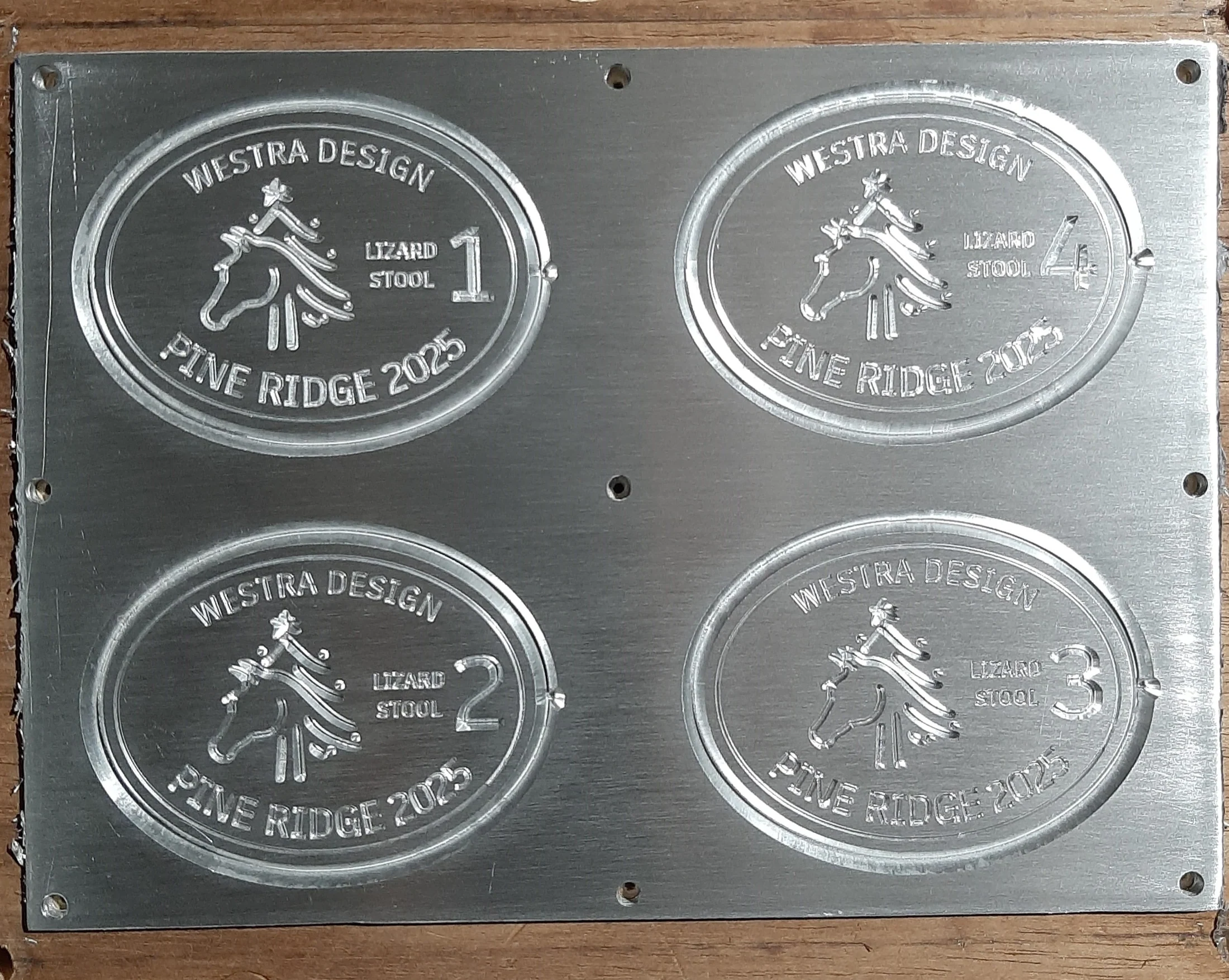
Four freshly machined oval engravings in an aluminium plate.
Freshly machined engravings in aluminium, one for each stool.
An oval aluminium identification plaque with dark lettering under a stool seat.
Resin infill makes the lettering stand out on the individual aluminium ID plaque.
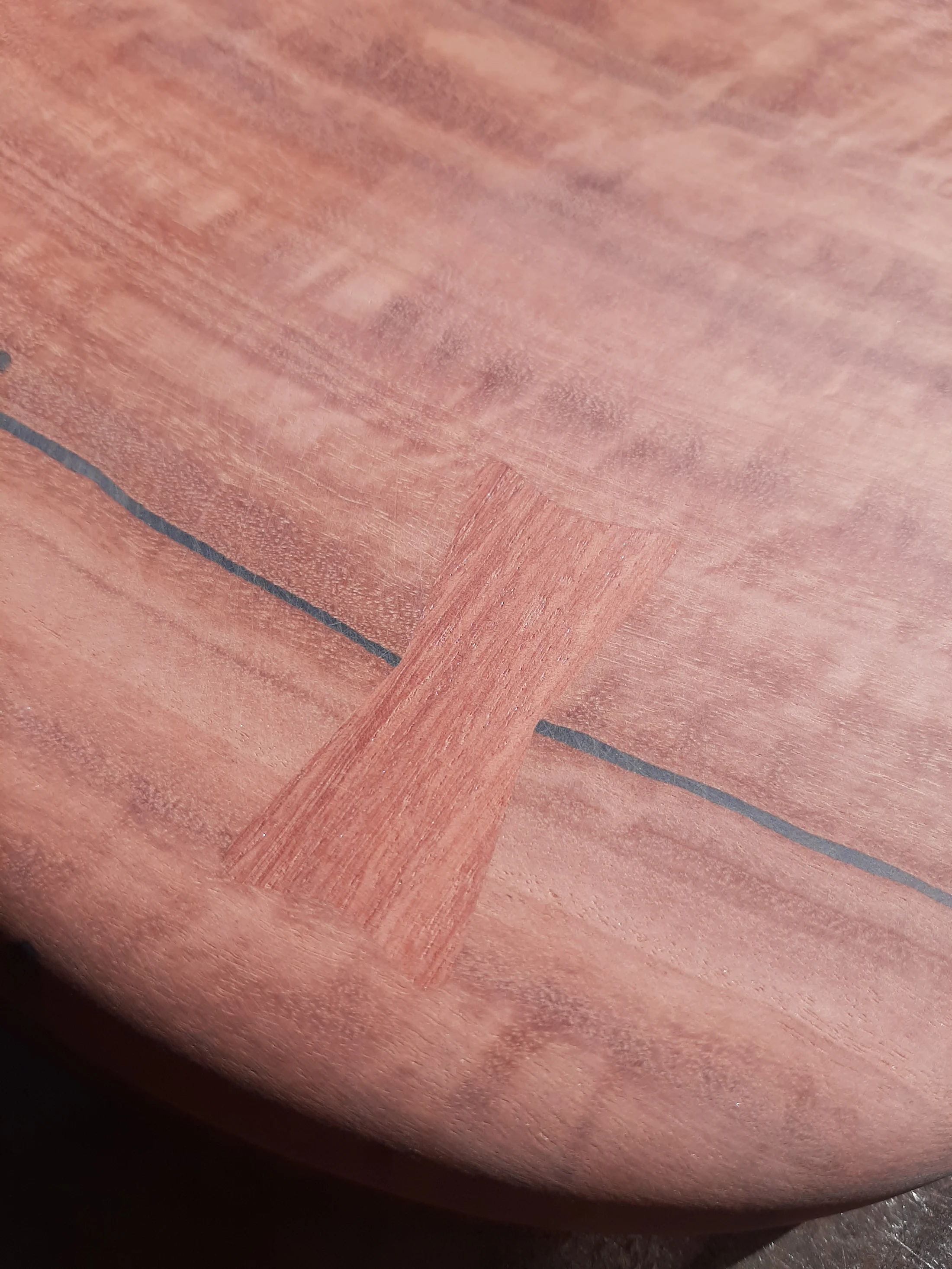
A timber bow-tie insert spanning a dark split in the finished seat.
A bow-tie insert across a split in the finished timber.
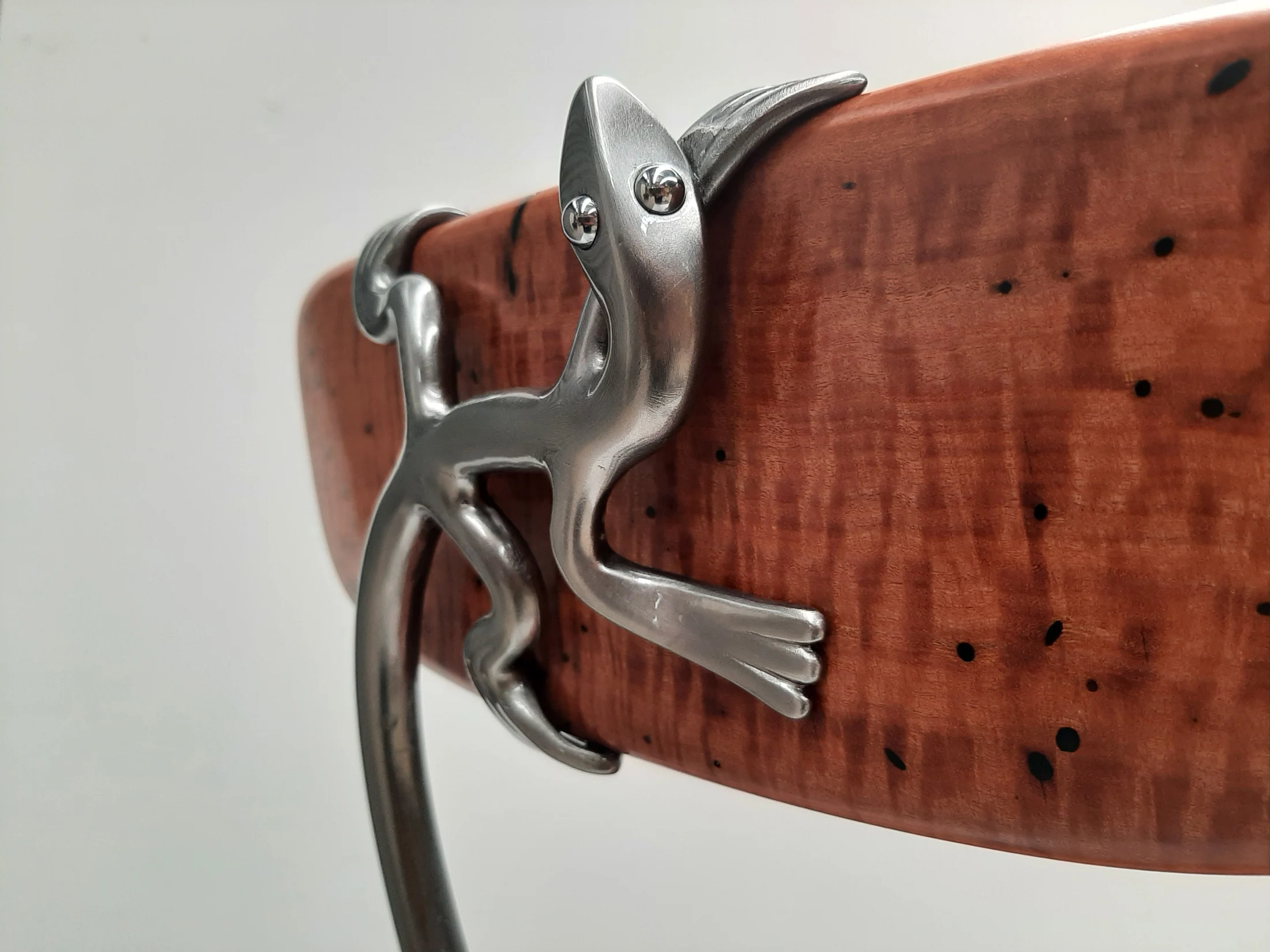
Close view of a clear-coated steel lizard gripping a warm-toned finished timber backrest.
The finished timber and warm tones of the clear-coated steel on a backrest lizard.
Lizard Bar Stools catalogue (PDF)