Thomas Westra · Unique sculpture
Feeling Free
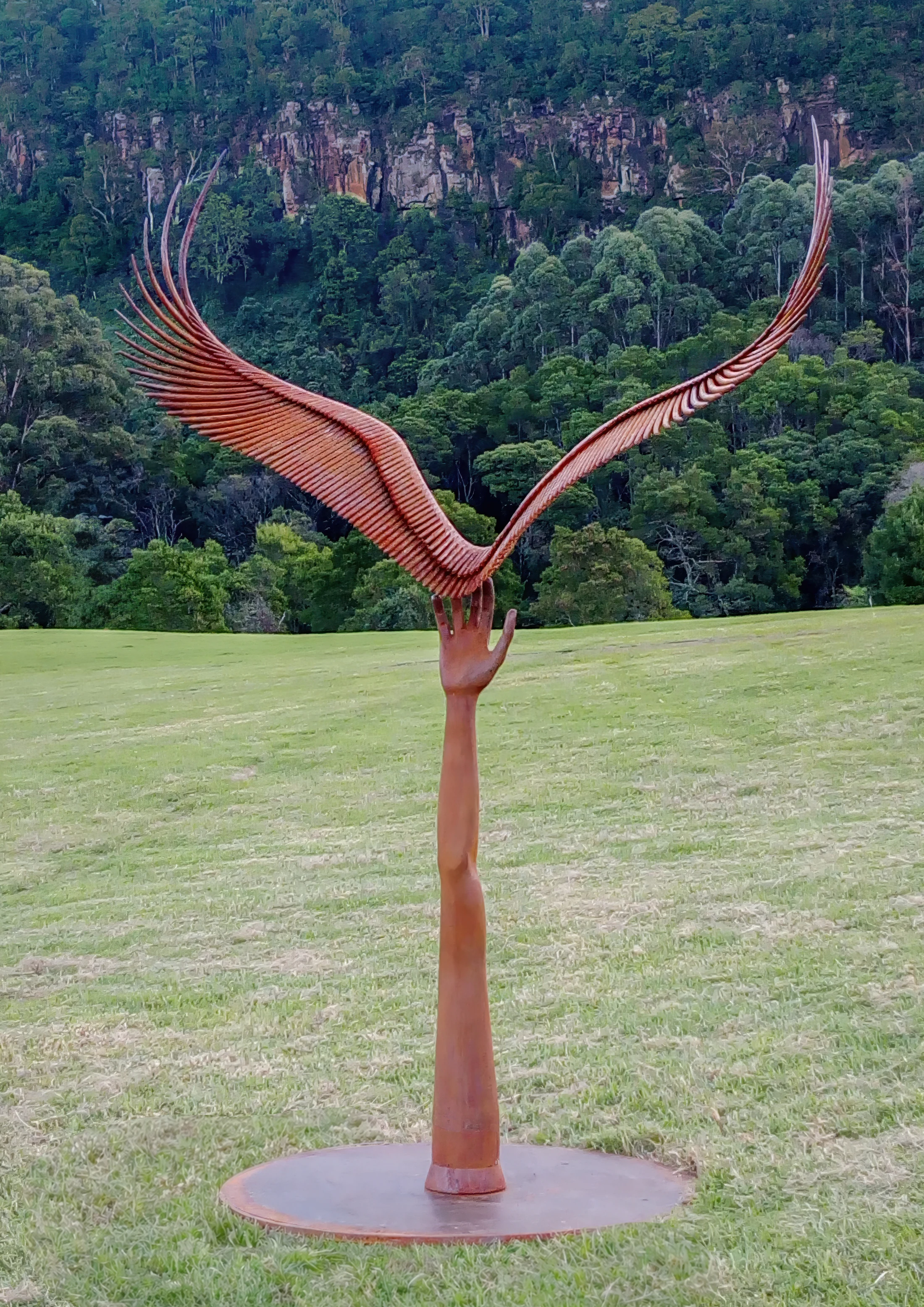
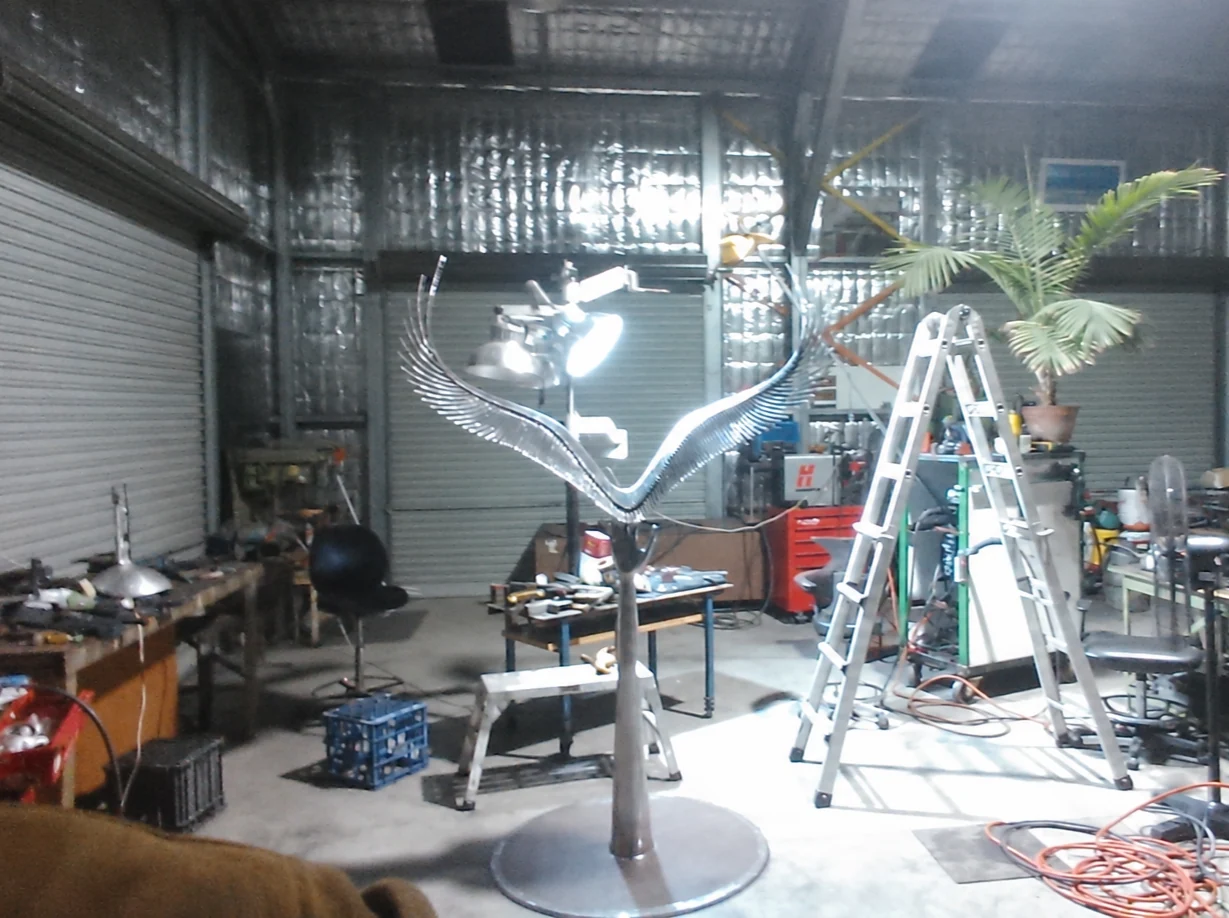
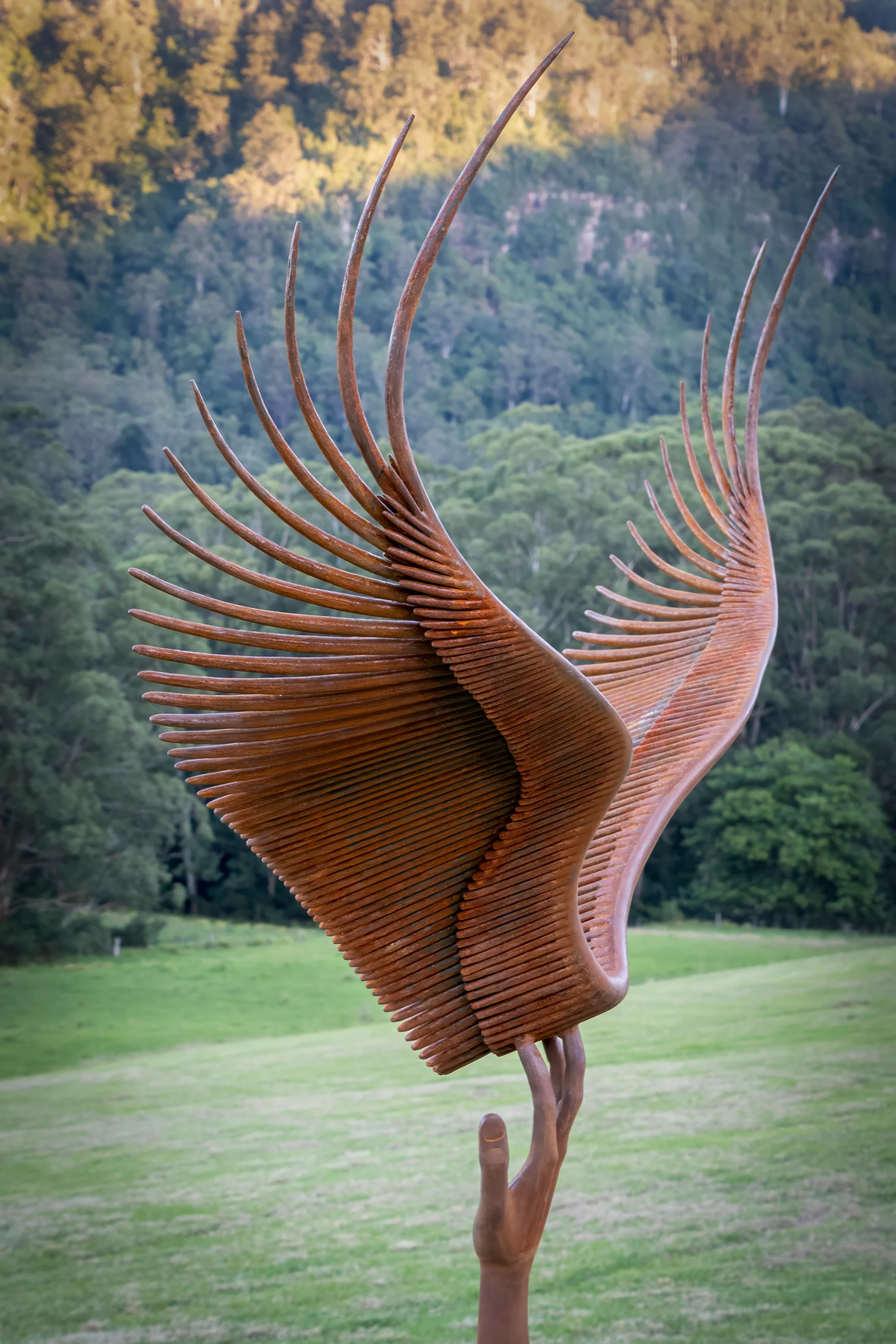
I made Feeling Free in 2019, at a turning point in my practice. Eagle wings formed from tapered round steel bars rest lightly on the fingertips of a steel hand at the end of an outstretched arm. To me, the wings suggest freedom, and the hand catches the delicacy of a touch that might last only a moment. A bearing in the base lets the whole sculpture turn in the wind.
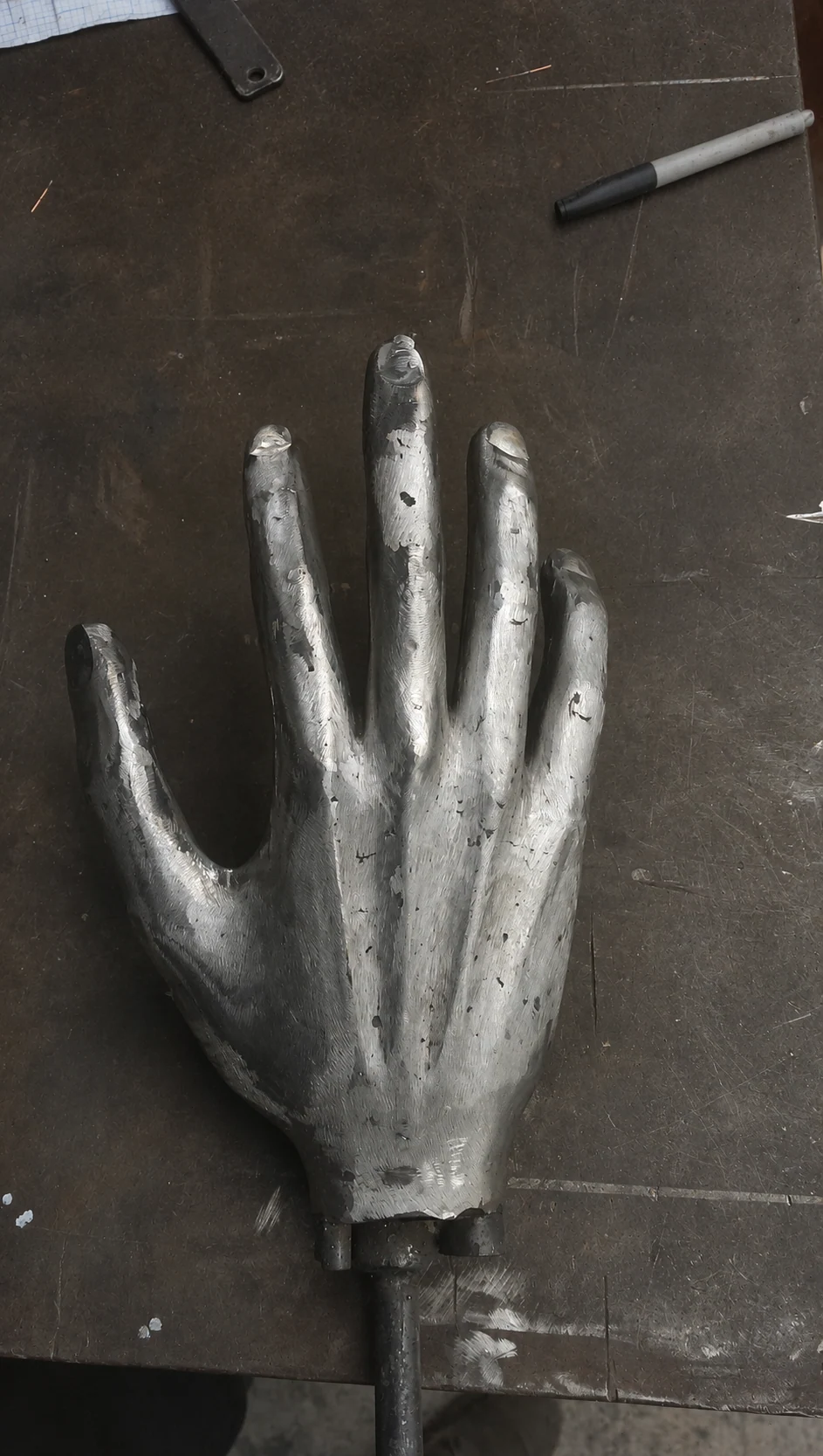
I’d built a robotic hot-forging system in my studio to take on the repetitive work of tapering steel tails for my lizard sculptures. It eased the physical strain and gave me new ways to shape steel. For Feeling Free, I measured my own fingers, scaled up the measurements and programmed them into the system. The hand carries a direct trace of how I worked: my own measurements, the machine’s forging and the shaping I finished by hand.
Feeling Free won the Outdoor Sculpture People’s Choice Prize at Sculpture in the Valley in 2019. Photographs of the work appeared in the International Institute of Welding’s Shaping the Future exhibition in 2026.
Watch my robotic forging system in action (YouTube Short) ↗Sold
Discuss a related commission- Materials
- Mild steel round bar (10–30 mm diameter), 16 mm mild steel plate and a reclaimed Ford Falcon front wheel hub
- Dimensions
- 260 cm high × 180 cm wide × 100 cm deep, including the permanent base
Up close
How it was made
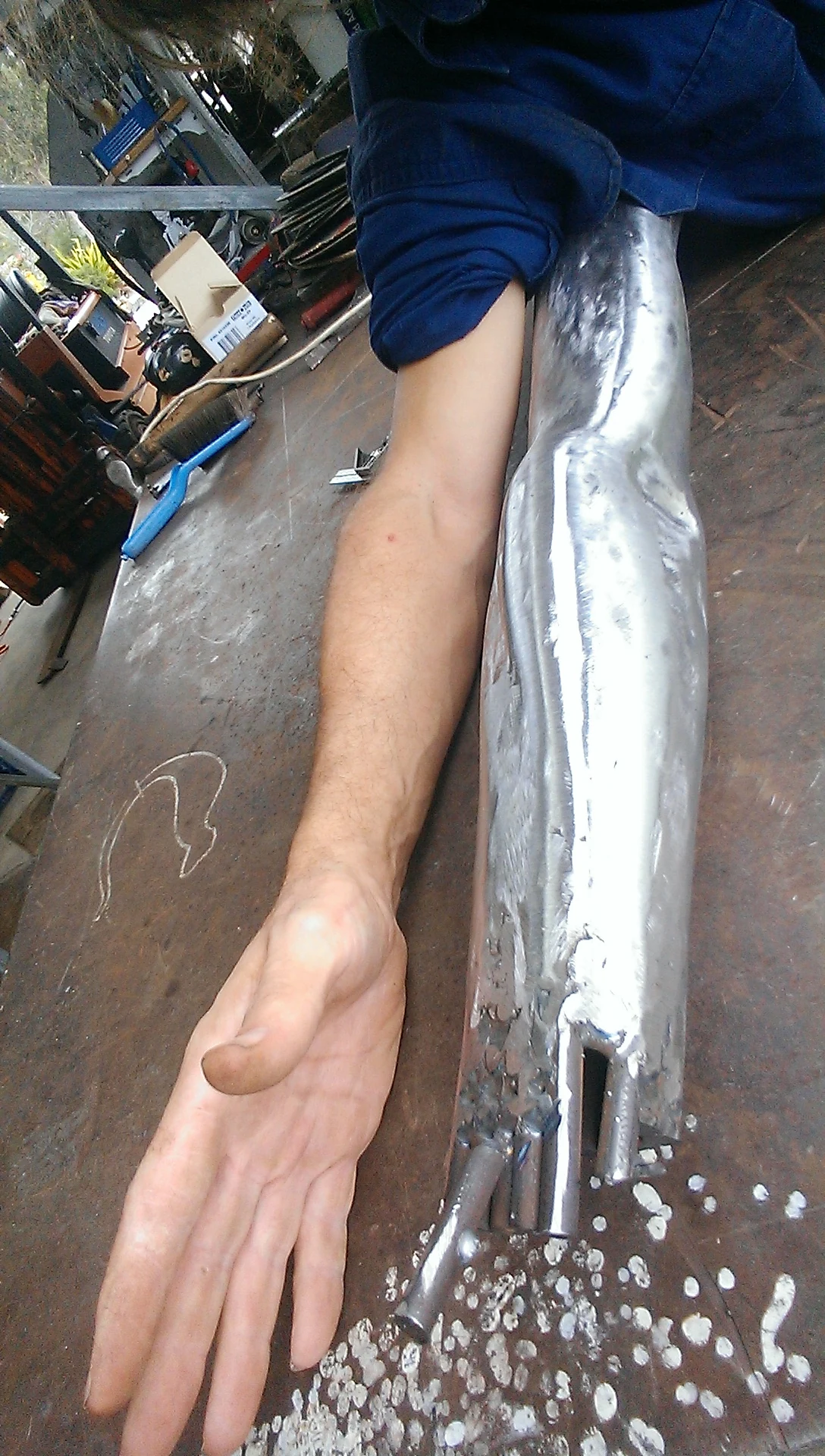
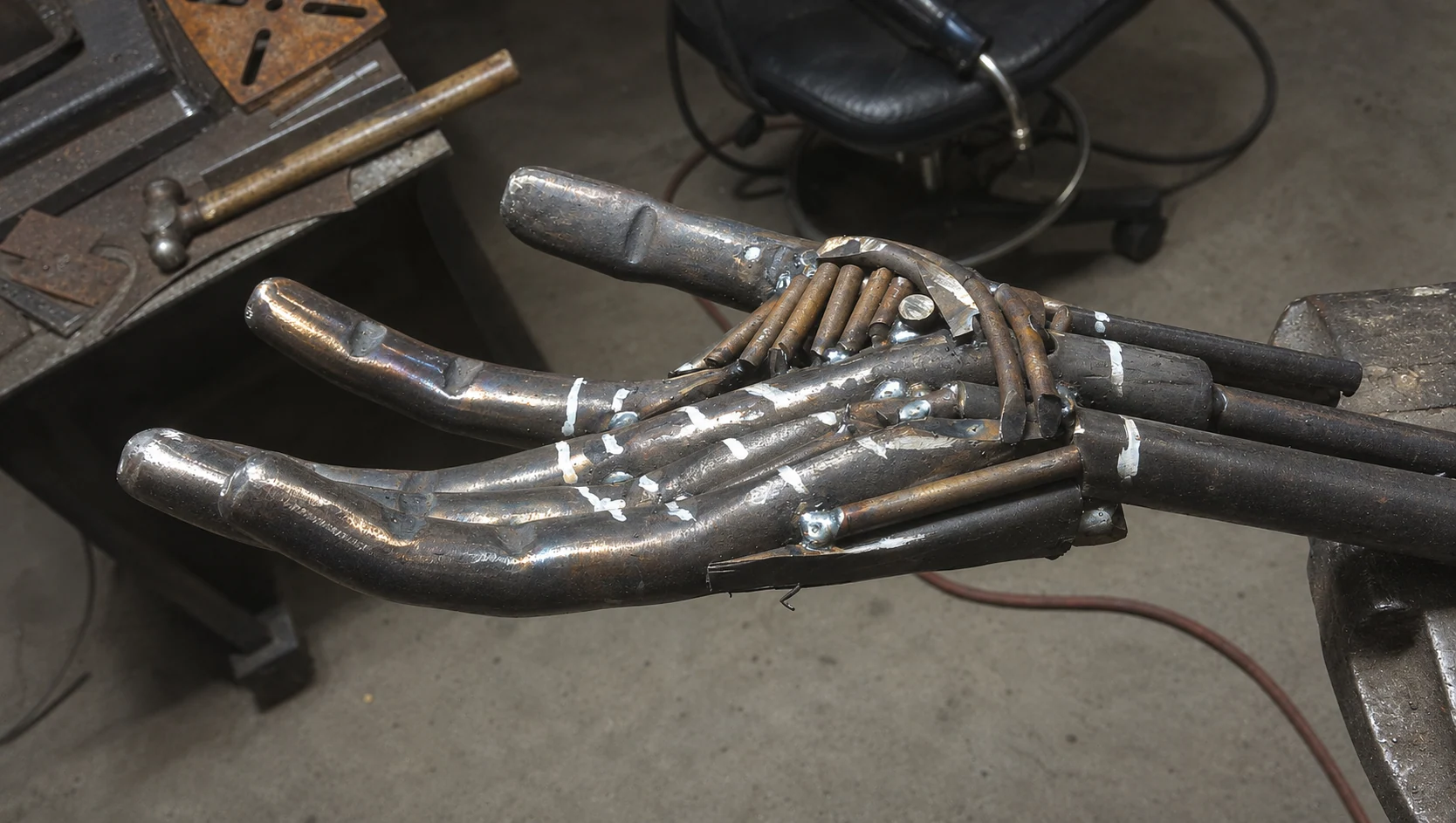
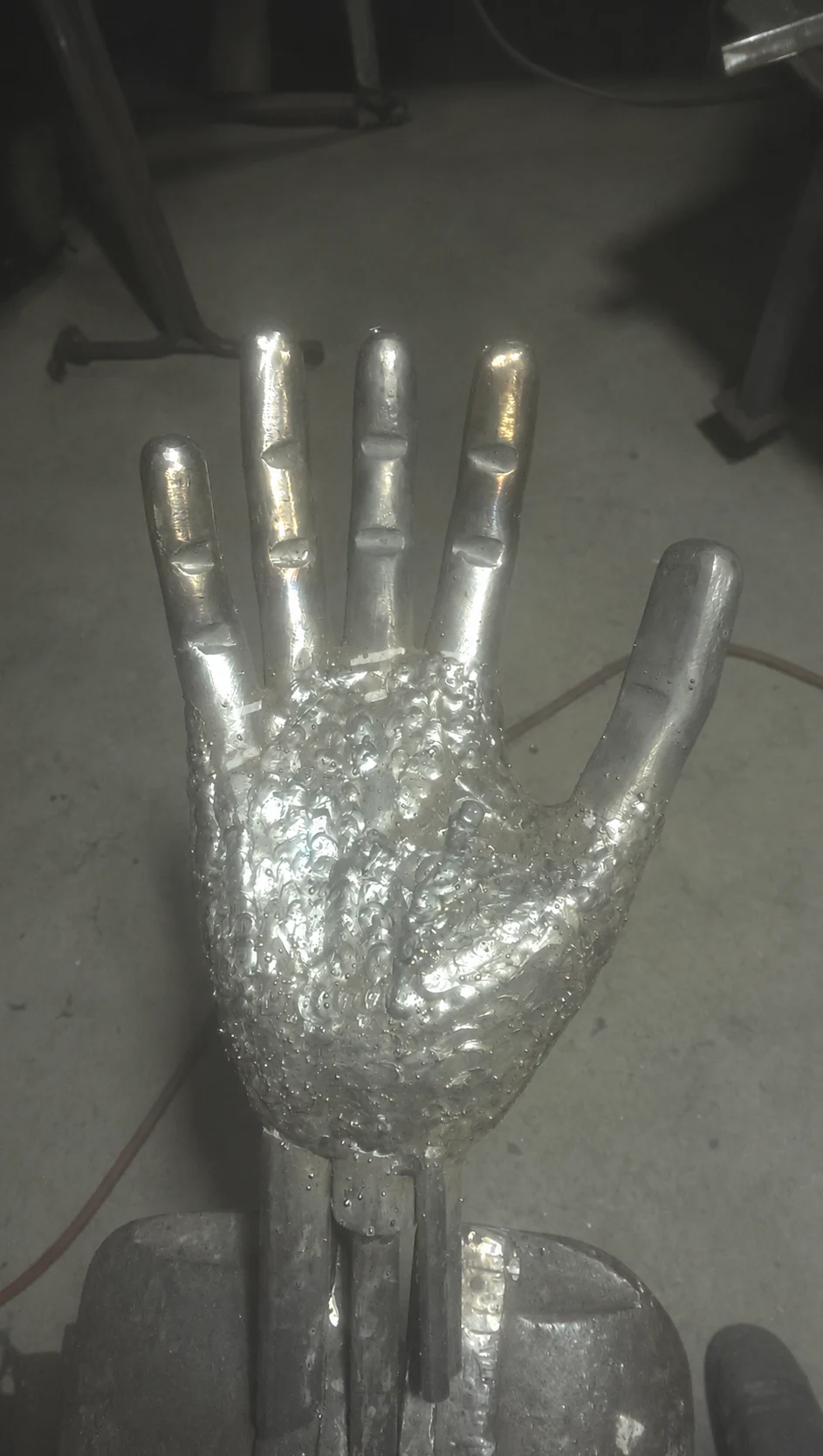
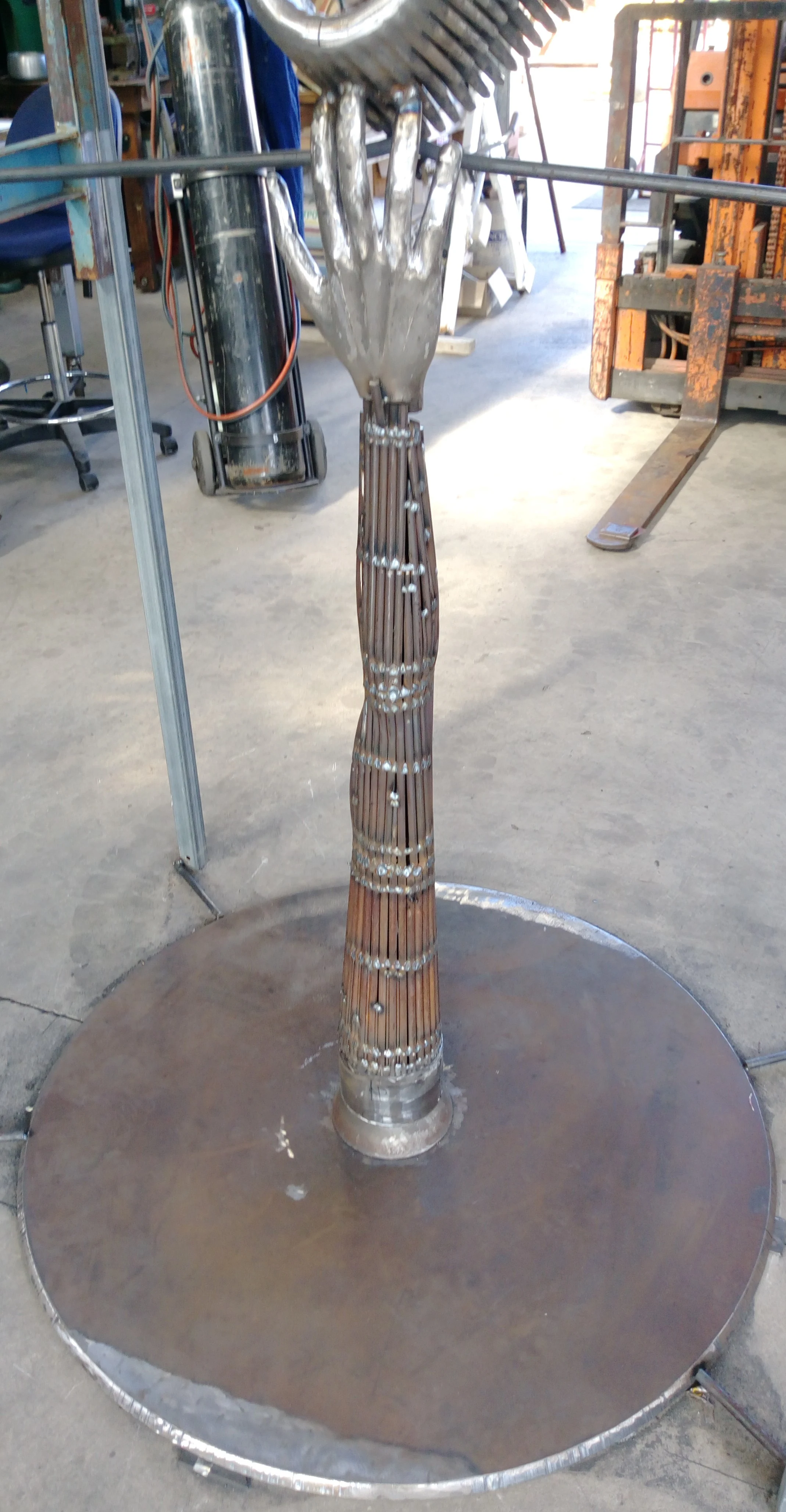
I measured my fingers with vernier calipers, scaled the measurements up by 30 per cent and entered them into the forging system. It was a special moment watching the machine shape a copy of the fingers that had built it. I used the machine to forge the tapered bars for the feathers and rough out the fingers, then brought them to their final shape by hand. I tack-welded round bars of different diameters to establish the form before fully welding them. I built up the surface with weld metal and used pulsed MIG welding to get a cleaner surface that needed less grinding. Some of the steel came from offcuts left over from making the lizards.